
Allegations of Child Abuse: POS Texas Army Sergeant Under The Gun
A disturbing case out of Waco, Texas forces us to confront an uncomfortable reality: child abuse doesn’t always look like a stranger lurking in the dark. Sometimes, it wears authority, routine, and silence. This video breaks down the facts of the case, the psychology behind violent outbursts against children, and the trauma left behind long after the footage stops. Using verified statistics and expert insight, we explore why abuse happens, how often it’s ignored, and what warning signs are missed. This is not content for shock—it’s a call to awareness, accountability, and protection for those who cannot protect themselves.
GRIM REALITYDISTURBING CASESSINS OF THE FLESHCHILD WARNINGNSFWNEWSTRENDING
1/28/20268 min read
Introduction to the Disturbing Incident
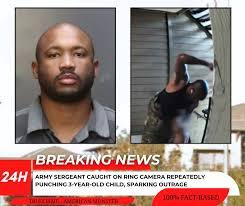
In a shocking series of events that has left many in Texas and beyond horrified, a U.S. Army sergeant has been identified as the suspect in an alleged brutal assault of a three-year-old boy. Reports indicate that the incident, captured on home security footage, shows the child in distress while being violently beaten by an adult male. The Waco Police Department has provided details surrounding the case, shedding light on the gravity of the situation.
Uniform, Power, and Silence: A 3-Year-Old’s Trauma Caught on Camera
I don’t know what time it was.
I only know the room was bright, and the floor felt cold on my feet.
I remember my toy truck was upside down. One wheel was stuck. I was trying to fix it the way Daddy showed me once—push hard, twist, don’t cry. I was being quiet. I was trying to be good.
Then his voice got loud.
Grown-ups’ voices change before they hurt you. Kids learn that early. It’s not the words—it’s the sound. Like thunder before rain. Like something heavy getting ready to fall.
I looked up.
He was big. Bigger than the door. Bigger than the couch. When grown-ups get angry, they look like they’re filling the room, like there’s nowhere left to hide. I didn’t know what I did wrong. I never know.
I remember saying “I’m sorry” even though I didn’t know why.
The first hit didn’t feel real. It felt like when you fall off a bike, and your body hasn’t decided to hurt yet. My ears rang. My eyes got blurry. I heard myself crying, but it sounded far away, like it was coming from another kid.
I curled up. That’s what you do. You make yourself small. Maybe if you’re small enough, they’ll miss you.
He didn’t.
I saw the wall. I saw the door. I saw the camera with the little blue light blinking. I didn’t know it was watching. I didn’t know anyone else would see. I just knew I wanted it to stop.
I begged. I don’t remember the words. Just the feeling—like my chest was breaking open. Like my tears were the only thing I had left to give him.
He kept going.
Every sound felt too loud. I'm crying. His breathing. The room itself felt angry, as if it were holding its breath. I remember thinking about my blanket. It smells like soap. How does it help alleviate bad dreams? I wanted to be anywhere else. I wanted to be invisible.
I thought maybe this is what I’m for.
When you’re little, you think everything that happens is because of you. If someone hurts you, it must mean you deserve it. That’s how kids make sense of things that don’t make sense.
I don’t remember when it stopped. I remember the floor. I remember shaking. I remember not wanting to move because moving made everything hurt more. I remember being scared to cry again, because crying makes adults angrier.
Then there were other voices.
New voices. Fast voices. Serious voices. Someone said my name gently, like it mattered. Someone knelt down so they weren’t tall anymore. Hands touched me, but they didn’t hurt. I flinched anyway. My body didn’t trust anyone yet.
I was picked up. I felt warm for the first time in a while.
Later, people would say words I don’t understand. “Video.” “Police.” “Arrest.” “Army.” Grown-up words that don’t fix what already happened. Grown-up words that don’t erase fear from a kid’s bones.
I don’t know why he did it.
I don’t know why I was the one.
All I know is that I cried, and someone finally heard it.
Somewhere, a camera blinked. Somewhere, strangers watched. Somewhere, adults were shocked. But in that room, it was just me—small, scared, and trying to survive someone who was supposed to protect me.
I don’t need people to go viral for me.
I need people to remember this:
Kids don’t understand cruelty.
We only understand pain—and whether someone comes to stop it.
And this time, someone did.
When Violence Wears Authority
There is a particular kind of horror that doesn’t scream. It doesn’t hide in alleyways or crawl out of abandoned buildings. It lives in living rooms. It wears familiarity. Sometimes, it wears authority.
In Waco, Texas, a three-year-old child was allegedly assaulted by an adult male captured on home security footage. The man, later identified by police as a U.S. Army sergeant, turned himself in. The child was taken to a hospital for evaluation. The facts are stark, restrained, and procedural. But what they describe is something far darker: the moment safety collapses inside a child’s world.
This wasn’t random violence. That’s what makes it unbearable.
Why does this kind of Violence Happens!?
Child abuse is rarely about loss of control. Research consistently shows it is about misused control. According to the U.S. Department of Justice and child welfare studies, perpetrators are most often caregivers or authority figures—people with power over a child’s body, schedule, and survival.
Stress is often cited, but stress alone doesn’t strike a child. What escalates stress into violence is a combination of factors:
Authoritarian belief systems where obedience is valued over empathy
Unresolved trauma, particularly in adults who experienced abuse themselves
Cultural normalization of corporal punishment, especially in environments where emotional vulnerability is discouraged
Power imbalance, where a child cannot escape, resist, or report
In some cases involving military or law-enforcement households, additional pressures exist. Studies from the Department of Defense and independent research institutions have shown elevated risks of domestic violence during periods of high operational stress, reintegration after deployment, or untreated PTSD. This does not mean most service members are abusive—but it does mean untreated trauma can metastasize in silence.
Violence becomes a language when emotional regulation is absent.
If you are someone with a heart or with a voice, please speak up about these shitty, garbage, fuck ass parents abusing their kids. Please click here and maybe even click here as well.
The Statistics We Don’t Like to Read
According to the CDC:
1 in 7 children in the United States experiences abuse or neglect each year
Children aged 0–3 are at the highest risk of serious injury or death
In over 80% of confirmed cases, the abuser is a parent or trusted caregiver
The National Children’s Alliance reports that children under five account for nearly half of all child abuse fatalities. These are not teenagers “talking back.” These are toddlers—children who are still learning words for feelings.
And yet, many cases never make it into statistics at all.
Because abuse inside the home is quiet.
Because children can’t testify.
Because bruises fade faster than trauma.
Trauma at Three Years Old
A three-year-old doesn’t process violence the way an adult does. There is no context. No justification. No understanding of “discipline.”
Neuroscience tells us that early childhood trauma rewires the brain. According to Harvard’s Center on the Developing Child, chronic stress and violence in early years can:
Disrupt the development of the prefrontal cortex (decision-making and emotional regulation)
Permanently elevate cortisol levels
Increase risk of anxiety, depression, aggression, and dissociation later in life
This is known as toxic stress.
The body learns before the mind does.
Long after the event, the child may flinch at raised voices. Panic when touched unexpectedly. Struggle to trust authority. These aren’t behavioral problems—they are survival responses.
When Authority Becomes a Shield
Cases like this ignite public outrage not only because of the act, but because of who committed it. Authority—whether military, religious, or institutional—often acts as insulation. It complicates accountability.
There is a dangerous myth that discipline requires pain, and that obedience is proof of love. This myth is reinforced in environments where hierarchy is rigid and emotional expression is seen as weakness.
But children are not recruits.
They are not subordinates.
They are not problems to be corrected.
When authority is weaponized against the powerless, it becomes indistinguishable from abuse.
The Internet and the Second Wound
The video went viral. That matters.
While public exposure can lead to accountability, it also risks turning a child’s suffering into spectacle. Trauma doesn’t end when the video stops playing. Every share, every comment, every slowed-down replay reopens the wound—especially when identity details leak.
This is the ethical paradox of the digital age: visibility can save lives, but voyeurism can dehumanize them.
Prevention Isn’t Complicated—It’s Uncomfortable
Preventing child abuse doesn’t require new technology. It requires:
Mandatory trauma-informed training for caregivers and authority figures
Accessible mental health services without stigma
Clear reporting channels that protect children, not reputations
A cultural rejection of violence as discipline
Most importantly, it requires listening—especially when children can’t speak for themselves.
The Real Darkness
The darkest part of this story isn’t the footage.
It’s the idea that without a camera, this might have continued.
It’s the knowledge that thousands of similar moments never get recorded.
And it’s the reality that for a three-year-old, the world is only as safe as the adults in the room.
When that safety is shattered, the damage doesn’t announce itself loudly. It settles in quietly. It waits.
This isn’t just a crime. It’s a warning.
Violence taught early is remembered forever.
And darkness doesn’t always look like a monster.
Sometimes it looks like authority raising its hand.
If you suspect child abuse, report it. Silence does not protect children. It protects against harm.
From Protector to Threat: When Power Turns on the Innocent
A U.S. Army sergeant from Texas is facing serious charges after authorities say he was captured on home security footage assaulting a 3-year-old child while the boy cried in distress.
The Waco Police Department identified the suspect as 29-year-old Paul Thames. According to officials, video of the incident began circulating widely on social media last week, prompting immediate concern. In a public statement, police confirmed they were aware of the footage and described it as depicting a violent attack on a young child. Thames later turned himself in and is now in custody.
Officers were dispatched to a residence in the 2400 block of Corporation Parkway at approximately 5:27 p.m. on Friday after a witness reported the assault. Investigators reviewed doorbell camera footage that allegedly shows Thames lifting the child and striking him multiple times in the torso.
Police said the child was transported by ambulance to a nearby hospital, where medical staff evaluated him for injuries.
Audio from the footage reportedly captures Thames speaking to the child during the incident, while the boy can be heard crying. At one point, Thames allegedly grabbed the child by the face before moving him out of the camera’s view.
The investigation remains ongoing.
The Response from Authorities and Community Reaction
In light of the allegations, the Waco Police Department has taken swift action. Thames reportedly turned himself in to the police, leading to his custody as investigations continue. The department's proactive approach highlights the importance of addressing child abuse swiftly and decisively to protect vulnerable individuals.
The incident has sparked widespread outrage and discussions regarding child safety in the community. Many express disbelief that such acts could occur, particularly by individuals who are supposed to serve and protect. The public's emotional response underscores the critical need for reporting and intervention in cases where potential abuse is suspected.
As the investigation unfolds, the community stands firm in its pursuit of justice for the young victim. The case serves as a grim reminder of the darker realities faced by many children and the necessity of vigilance from both authorities and citizens alike.
Conclusion and Call for Awareness
As details surrounding this tragic incident continue to emerge, it is essential to foster a culture of awareness and vigilance regarding child welfare. The alleged actions of Paul Thames raise significant concerns not only about the individual case but about the systemic issues surrounding child protection. Advocates of child rights urge members of the community to report any suspected abuse to authorities immediately to prevent such occurrences in the future.
Disclaimer:
Some details in this article have been exaggerated or stylized for dramatic and horror-focused storytelling purposes. This piece is intended strictly for entertainment within the dark, horror-true-crime genre and is NOT meant to mock, disrespect, or diminish the real tragedy of anyone's situation or circumstances. Our deepest condolences remain with the victim's family, friends, and loved ones.
Despair
A dark exploration of societal decay and despair.
Void
+1234567890
© 2025. All rights reserved.
Any comments, business inquiries, ideas, or stories, let us know