
The Disturbing Conclusion of Robert Budd Dwyer's Broadcast: A Political Scandal Drenched in Blood
Robert Budd Dwyer’s televised suicide in 1987 shocked the world. This deep-dive uncovers the graphic details of his death, the political corruption scandal that ruined him, and shocking evidence suggesting Dwyer may have been innocent all along. Explore the tragic story of a man destroyed by the system he served, with embedded videos and documents that reveal the dark truths behind the infamous Robert Budd Dwyer press conference shooting.
DISTURBING CASESGRIM REALITYCONSPIRACY THEORIESNSFWOUR DREADFUL WORLD
9/9/20254 min read
The Unraveling of a Political Career
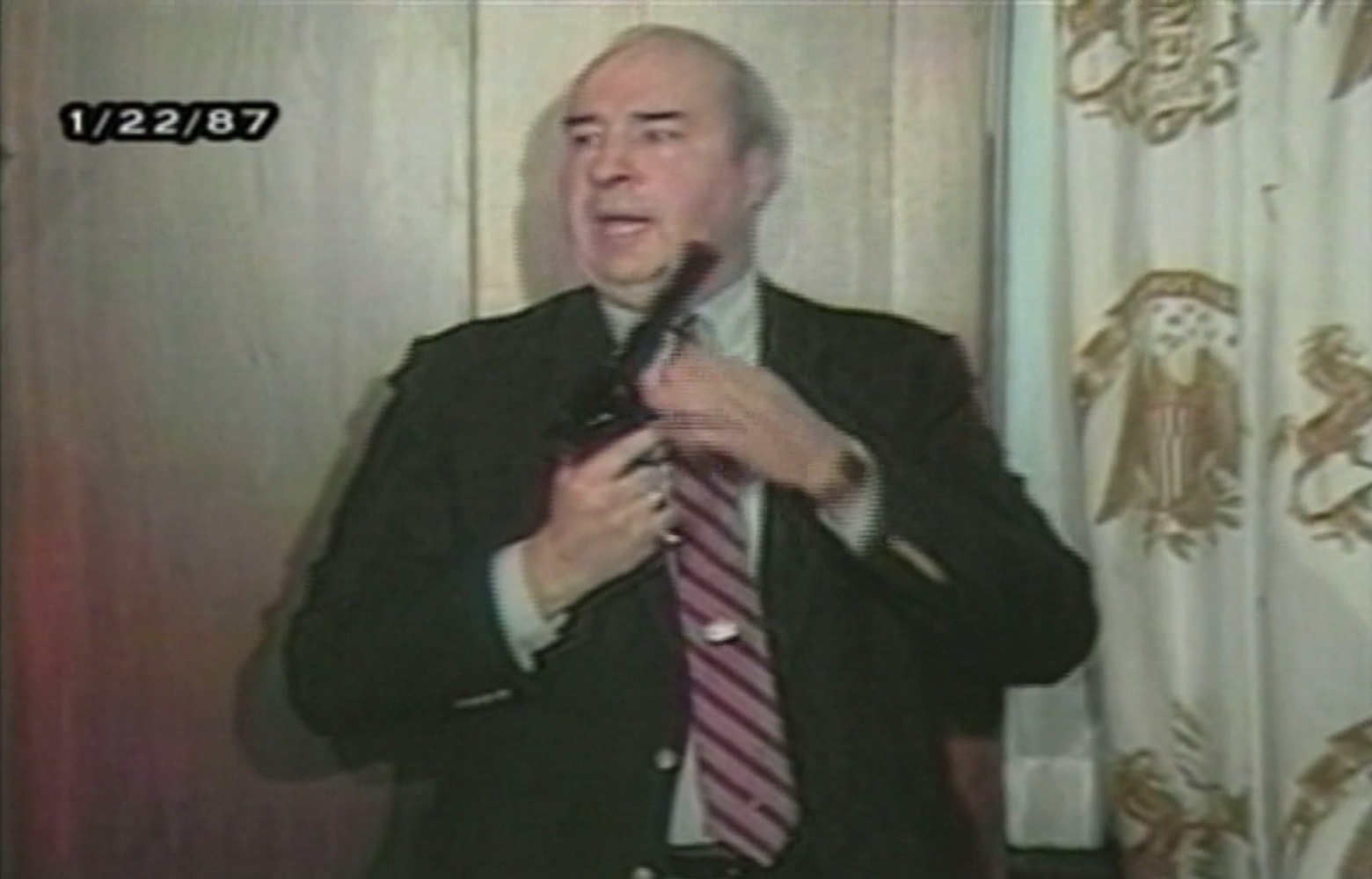
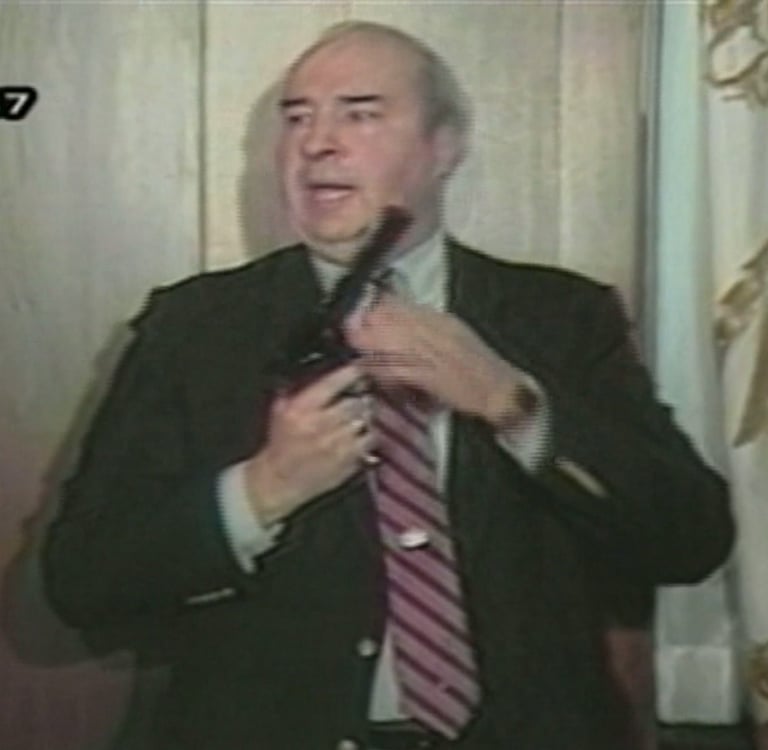
On January 22, 1987, television screens across Pennsylvania lit up with what was supposed to be an ordinary press conference. Instead, viewers bore witness to something far more sinister: Robert Budd Dwyer, the state’s treasurer, pulling a .357 Magnum revolver from an envelope and blowing his brains out on live TV.
For decades, Dwyer’s death has been replayed, analyzed, and mythologized. But beneath the gore and shock lies a chilling tale of political corruption, betrayal, and—some argue—an innocent man pushed to the edge.
This isn’t just the story of a suicide. This is the story of how a system chewed up and spat out a man, leaving only blood and questions behind. This broadcast soon evolved into one of the most infamous moments in U.S. political history, steeped in both tragedy and controversy. Dwyer, once a respected politician, became synonymous with the dark side of governmental corruption.
A Political Scandal Drenched in Blood
Initially, Dwyer was hailed for his accomplishments, but the winds of change began to blow unfavorably as his career progressed. He was implicated in a scandal involving bribery related to a state contract. The ensuing investigation painted a grim picture of corruption that scandalized his constituents and shattered public trust in elected officials.
Despite being indicted and facing substantial legal repercussions, Dwyer maintained his innocence. The culmination of these events led to his disastrous press conference where he intended to proclaim his side of the story. What should have been a straightforward assertion of his innocence quickly spiraled into a deeply tragic and bloody moment that forever altered his legacy.
The Rise and Fall of Budd Dwyer
Robert Budd Dwyer was a small-town politician who climbed the ladder of Pennsylvania’s political world. Known for his charm and affability, he served in the Pennsylvania State Senate before becoming the state’s Treasurer in 1981.
But in 1986, his career unraveled. Dwyer was accused of accepting a $300,000 kickback in connection to a state employee compensation contract scandal. The prosecution claimed Dwyer had steered the contract to California firm Computer Technology Associates (CTA) in exchange for the payout.
Though he vehemently denied the charges, the jury convicted him of bribery, conspiracy, and mail fraud. He faced 55 years in prison and a $300,000 fine.
"I am innocent," Dwyer said during his trial, but his pleas fell on deaf ears.
(📄 *You can read more about the CTA scandal and trial here on the PennLive archives.)
The Press Conference From Hell
On January 22, 1987—one day before his sentencing—Dwyer called a press conference at the state capitol. Reporters assumed he was going to resign. Instead, Dwyer shuffled papers, addressed the room, and then handed out three sealed envelopes to his aides.
Then he pulled out a large Manila envelope and produced a blue-and-silver revolver.
"Please leave the room if this will offend you," he said. Panic spread through the room as people pleaded with him to stop.
But Dwyer raised the gun to his head and fired.
The Gore That Shocked a Nation
The bullet tore through Dwyer’s skull, bursting out the back of his head in a mist of blood, brain matter, and bone fragments. His body slumped to the floor, blood pooling beneath his face as horrified reporters screamed. The camera kept rolling, capturing every second in grim detail before the feed cut out.
The room smelled of gunpowder and iron-rich blood, and pieces of Dwyer’s teeth and scalp dotted the podium. Some reporters fled vomiting. Others stood frozen, staring at the grotesque scene.The Final Broadcast: A Harrowing Event
On the day of the press conference, Dwyer arrived with a prepared statement, but his intentions took a horrifying turn. As he began to speak, he pulled out a revolver, shocking everyone in attendance. In a moment that will be remembered for eternity, he shot himself on live television. This act of desperation not only signified the tragic end of Dwyer's life but also served as a haunting commentary on the devastating effects of political pressure.
The aftermath of this event left a profound impact on the public, as many grappled with the horrifying reality of what unfolded. Dwyer’s final broadcast did more than document a significant political scandal; it exposed the mental toll that such relentless scrutiny and accusations can take on a person. The footage circulated widely, sparking fierce debates about ethics, mental health, and the responsibilities of public figures.
The Legacy of Dwyer's Actions
Robert Budd Dwyer’s shocking broadcast is now viewed as a stark reminder of the intersection between politics and personal crises. His legacy is forever tainted by a scandal that led to his demise, illustrating the extreme lengths one may resort to when facing overwhelming pressure and public condemnation.
Today, discussions surrounding Dwyer's final moments often converge not only on the tragedy of his actions but also on the broader implications for political figures and the media. As we reflect on this dark chapter of American politics, we are compelled to consider the impact it had on our understanding of ethics in governance and the importance of mental health awareness for individuals under public scrutiny.
The Fallout: Was Dwyer Innocent?
In the aftermath, debates erupted about whether Dwyer had been railroaded by overzealous prosecutors.
• Key witness William T. Smith later admitted in interviews that he perjured himself to secure a plea deal, casting doubt on Dwyer’s guilt.
• Dwyer refused to accept a plea bargain during his trial because, he said, “I will not admit to something I did not do.”
• Some legal analysts argue that Dwyer was targeted as a scapegoat for larger corruption within the Pennsylvania government.
(📚 Read the full analysis on Innocence Project archives.)
To this day, many believe Robert Budd Dwyer was innocent—his blood on the capitol floor not just the stain of a man’s despair, but the evidence of a corrupt system gone unchecked.
Dwyer’s Final Words
Before raising the gun, Dwyer read a prepared statement:
"This will hurt someone. It will leave a scar. But please leave immediately if this will offend you. Please leave the room."
His words echo like a dirge for an America where justice often bends under the weight of political ambition.
Final Thoughts: The Badge, the Bullet, and the Blood
Robert Budd Dwyer’s televised death remains one of the most haunting moments in media history. But behind the gore lies a tragedy even darker: the possibility that an innocent man was destroyed by the very system he served.
The bullet wasn’t just fired into Dwyer’s skull—it was fired into the heart of public trust.
As long as his blood-soaked image circulates online, the question lingers: Was Dwyer guilty? Or was he, as many believe, another casualty of a political machine that eats its own?
Sources and Links
Despair
A dark exploration of societal decay and despair.
Void
+1234567890
© 2025. All rights reserved.
Any comments, business inquiries, ideas, or stories, let us know