
The Bloods: A Deep Dive into Los Angeles' Notorious Street Gang
The Bloods are one of Los Angeles’ most notorious street gangs, formed in the early 1970s as a counterforce to the growing power of the Crips. Originating with the Piru Street Boys, the alliance expanded to include sets like the Brims, Bishops, and Denver Lanes. Known for their signature red colors, intense loyalty, and brutal street code, the Bloods became infamous for drive-bys, turf wars, and acts of extreme violence. Over decades, they have left a bloody mark on L.A.’s history, yet some members and former leaders now work to steer youth away from gang life, seeking reform amidst a violent legacy.
DISTURBING CASESGRIM REALITYOUR DREADFUL WORLD
9/8/20257 min read
Origins and Establishment
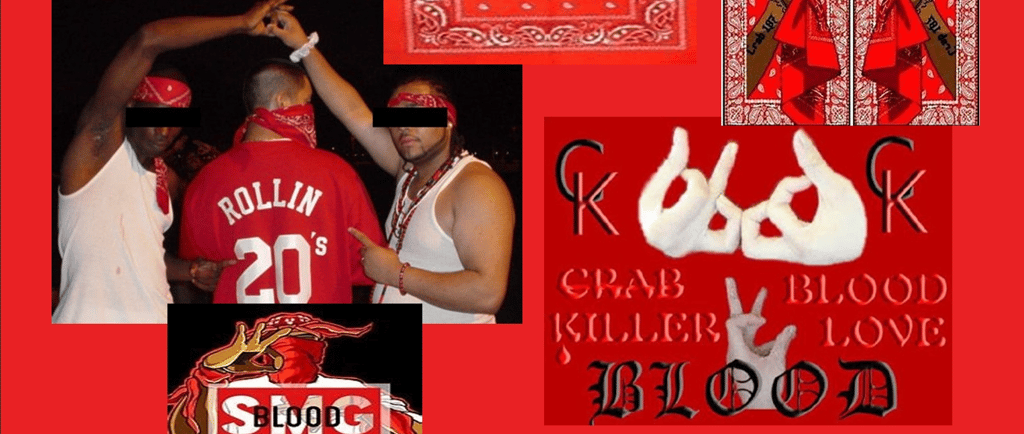
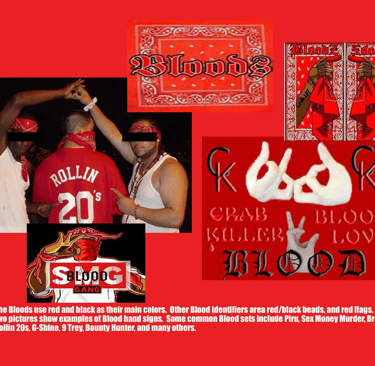
The Bloods, one of Los Angeles’ most infamous street gangs, emerged in the early 1970s as a response to the rising influence of the Crips. The gang's origins can be traced back to a group known as the Piru Street Boys, who sought to create a protective alliance amidst the disorder and violence prevalent in Los Angeles during that era. This initial faction laid the groundwork for the formation of several sets, including the Brims, Bishops, and Denver Lanes, each adapting to the unique challenges and dynamics of their respective neighborhoods.
The Bloods emerged in the early 1970s out of necessity, as young Black men in Los Angeles faced growing pressure from the expanding Crips, who were rapidly asserting control over the streets. The Piru Street Boys, initially allied with the Crips, broke away when conflicts escalated, establishing the foundation for a new, fiercely independent gang. This split marked the beginning of the Bloods’ identity, rooted in self-preservation, territorial pride, and resistance to domination. Over time, other groups, including the Brims, Bishops, and Denver Lanes, joined forces with the Pirus, forming a loose but deadly network of sets. Each set adapted to the unique conditions of its neighborhood, whether navigating the crack epidemic, defending territory, or engaging in retaliatory violence. Together, these factions cultivated a reputation for both fearsome ruthlessness and unbreakable loyalty, solidifying the Bloods as one of Los Angeles’ most notorious and enduring street gangs. The alliance not only provided protection but also created a culture of brotherhood, codes of conduct, and initiation rites that bound members together in the face of constant danger, shaping the gang into a lasting force on the city’s streets.
The Piru name became synonymous with pain. New members were “jumped in,” beaten until their ribs cracked, faces split open, and blood pooled on the pavement—an initiation by suffering. Territory wars were constant; every block was a front line. Rivals were not just shot—they were sometimes mutilated, bodies left in grotesque poses as warnings. Piru hoods reeked of death and vengeance, an unforgiving environment where fear was currency.
The Gore and Glory of the 70s and 80s
The 1970s and 80s were when the streets of South Central became open-air war zones. Gunfire was a soundtrack, sirens the chorus. Bloods and Crips tore into each other with relentless brutality—massive shootouts in alleys, point-blank executions, and home invasions where families were slaughtered just for living in the wrong ZIP code.
In 1978, a Crip was found with his tongue cut out and shoved into his pocket—a bloody warning about snitching. In 1980, a triple homicide in Compton saw three rivals lined against a wall and executed with .38 revolvers. Their blood splattered across graffiti-tagged brick, turning the crime scene into a crimson mural. 1984 saw an infamous retaliatory firebombing that left two burned alive in their home—neighbors reported smelling burnt flesh for hours.
Bodies were dumped in parks, throats slit, fingers chopped off, and eyes gouged. Police would often find corpses hog-tied, faces unrecognizable from stomping. In one case, a man was set ablaze in front of his family and left screaming until he collapsed. The streets were soaked in blood, a constant cycle of revenge where funerals doubled as recruiting grounds.
Crimes and Carnage: The Bloody Ledger
Real-life cases read like horror scripts. In 1972, shortly after the Piru Street Boys unified into the Bloods, a Crip was shot point-blank with a shotgun, his skull nearly blown apart, his remains dumped behind Imperial Courts. Police reports from the mid-70s detail bodies missing ears, noses, even genitals—sadistic warnings to rival sets.
In 1984, a Crip was dismembered, his limbs scattered across train tracks near Watts, leaving police physically sick at the scene. In 1988, Karen Toshima, a 27-year-old civilian, was killed in a crossfire between Bloods and Crips in Westwood Village—proof that the violence had spilled beyond South Central.
Drive-by shootings became community-wide terror. In one 1988 case, gunmen sprayed a birthday party with AK-47 fire, killing two toddlers and three adults—victims’ faces shredded so badly that open-casket funerals were impossible. The St. Andrews Park Massacre in 1991 left five young men executed point-blank and stacked together like trash, a twisted calling card from their killers.
In 1993, LAPD recovered the body of a man who had been tortured for hours before death—stabbed over 40 times, burned with cigarettes, and left with gang tags carved into his chest. Another case saw a pizza delivery driver killed simply for entering Blood territory while wearing blue. These were not isolated cases—they were daily realities. Documented incidents like the 1984 murder of Gail Christian, where she was beaten and shot by gang members for refusing to give up her car, show how random and ruthless the violence became. Police units like Operation Hammer swept through neighborhoods, arresting thousands, but the bloodshed didn’t stop—it only got more creative, with reports of bodies found stuffed in trunks, kneecaps blown off as warnings, and execution videos traded like trophies.
The Rise of Suge Knight
Suge Knight wasn’t just a CEO—he was a gangster in a business suit. As head of Death Row Records, he allegedly used fists, bats, and intimidation to get his way. He was feared for allegedly ordering brutal beatdowns where bones were shattered and rivals were left bleeding in alleys. Stories circulated of Suge personally stomping on men until teeth scattered across studio floors, pistol-whipping producers until their faces looked like ground meat, and smashing skulls against car hoods to make a point. He allegedly rolled with enforcers who would drag people out back and work them over with bats and chains, leaving victims barely breathing. Tales of him dangling men from balconies and orchestrating beatdowns became urban legend. Death Row was part recording label, part war room, and Suge made sure Blood influence dominated the West Coast rap game. Tupac Shakur, who many claim Suge shielded and exploited in equal measure, became the fiery face of this era—spitting bars that painted the bloodshed of L.A. with poetic rage before being gunned down in 1996, a murder still unsolved but forever tied to the war between rival camps. After leaving Death Row's peak behind, Suge Knight faced a series of scandals, lawsuits, and brutal run-ins with the law, including the fatal 2015 hit-and-run incident that left Terry Carter dead and landed Suge with a 28-year prison sentence. He remains incarcerated today, a cautionary figure whose legacy is soaked in both platinum records and spilled blood.
The Infamous 6ix9ine
Daniel Hernandez, aka 6ix9ine, turned gang culture into viral marketing—only to flip and cooperate with the feds. He paraded as a Nine Trey Gangsta Blood, throwing up signs in videos, flashing red flags, and even allegedly financing violent attacks on rivals. But when federal indictments came down, he folded fast—naming names, describing gang hierarchy, and testifying against his own crew. Others took 15-to-life sentences while he walked free under witness protection. His reputation as a rat became cemented, with both Bloods and Crips publicly declaring him persona non grata.
Post-trial, Hernandez leaned into his villain image, but scandals kept piling up like bodies in the streets he once pretended to run. He was accused of punching fans, caught on camera brawling in public parking lots, and sued multiple times for stiffing bodyguards and promoters. He made it worse by going online and taunting the dead—mocking King Von and Nipsey Hussle—rubbing salt into wounds that hadn’t even healed. His beefs with Meek Mill, Chief Keef, and Lil Durk turned into public spectacles, with 6ix9ine hiding behind thick security while calling them cowards. Allegedly, he never was a true Blood and many gang members publicly called him a rat, a fake, using gang imagery for views while betraying associates when faced with federal charges. This cemented him as a clownish, fake Blood—a man who rented the culture, snitched when it got too real, then cashed in on the notoriety. After his trial, he was involved in multiple scandals, public fights, and lawsuits, continuing to taunt rivals online. Even today, his name is spit like venom in gang circles, a cautionary tale about what happens when you play gangster but don’t live by the code.
Jay Rock, Hi-C, and O.Y.G. Redrum 781
Jay Rock, repping the Bounty Hunter Bloods from Nickerson Gardens, turned his violent upbringing into lyrical testimony, with verses soaked in the reality of drive-bys, retaliations, and the piles of bodies left behind in Nickerson Gardens during the crack epidemic. His lyrics captured the smell of gunpowder and the sound of mothers wailing over murdered sons. Hi-C held it down for Compton, spitting about gang shootouts, retaliations, and bodies found slumped in cars—his rhymes became time capsules of blood-soaked Compton nights. O.Y.G. Redrum 781, a respected Piru affiliate, was instrumental in the legendary “Banging on Wax” project—uniting Bloods and Crips in the booth to rap about the war they were living, immortalizing the death toll in music that felt like both confession and obituary. The project made listeners feel the dirt under their fingernails from burying too many homies, the hot spray of bullets that claimed so many lives, and the hopeless pride that kept the cycle turning. The 70s and 80s were painted in arterial spray—guts spilled on sidewalks, heads split open in front of liquor stores, and alleys littered with shells. Mothers had to scrub their porches clean of blood before sunrise, children stepped over corpses to get to school, and paramedics described scenes like war zones with brains on the pavement and bodies still twitching when they arrived.
The Modern Bloods and Reform
Today, some OGs are tired of burying their homies. Community leaders, many ex-Bloods, work with at-risk youth to steer them away from gang life. Ceasefires are negotiated, peace marches organized. Some even collaborate with former Crip rivals to prevent shootings before they happen. Still, the streets remain dangerous—killings continue, retaliation cycles simmer. The concrete still remembers, stained with the ghosts of the past.
The Bloods’ legacy is both nightmare and survival story—a saga of pain, pride, murder, and rebirth. The question now is whether the next generation will keep writing in blood or finally put down the gun. Yet even with reform efforts, there are still nights when the streets echo with gunfire, when mothers cry over fresh bloodstains, and when young recruits get jumped in, their faces beaten to pulps, bones broken, leaving pools of blood under streetlights. The ghosts of the 70s and 80s still walk South Central, a reminder that every step forward is taken on concrete soaked with history.
Sources:
[Rolling Stone – The Rise and Fall of Suge Knight]([https://www.rollingstone.com/music/music-ne
Despair
A dark exploration of societal decay and despair.
Void
+1234567890
© 2025. All rights reserved.
Any comments, business inquiries, ideas, or stories, let us know