
The Tragic Tale of Bianca Brust: A Cautionary Story
LEER, GERMANY – February 20, 2008 Bianca Brust, a young woman from Germany, visited her friend Matthias Schoormann, 32, at his apartment in Leer. During their meeting, he confessed romantic feelings for her, which she did not reciprocate. The situation escalated into a violent confrontation that resulted in Bianca’s death. Investigators later discovered evidence linking Matthias to the crime and to the online sharing of related materials. Following the incident, he died in a deliberate car crash on the autobahn. Authorities classified the case as a murder–suicide that deeply shocked both the local community and online circles.
DISTURBING CASESGRIM REALITYSINS OF THE FLESHNSFWOUR DREADFUL WORLD
11/7/20258 min read
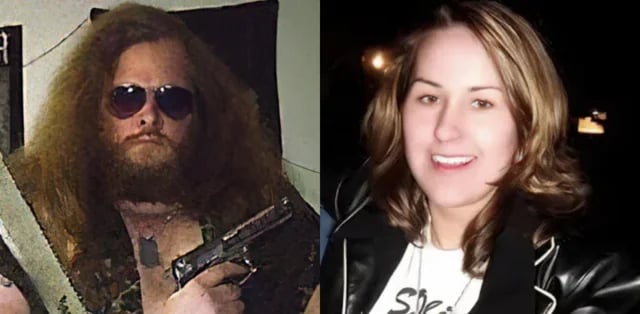
The Monster She Called a Friend
I told her not to go.
I told Bianca that something about him wasn’t right.
Matthias Schoormann — thirty-two, too old to be hanging around a girl barely in her twenties, too quiet in that way that isn’t shy, just watchful. The kind of man who studies people, not because he cares, but because he wants to see where they break.
She laughed when I said that. She always laughed when she was uncomfortable.
“Oh, Hannah,” she told me, “you’re always imagining things. He’s just lonely.”
Lonely. That was her weakness. Bianca couldn’t stand loneliness. She felt sorry for everyone, even the ones who didn’t deserve it. Especially them.
I met him twice. Once at a café, once at a small concert. Both times, his eyes lingered too long, like he was memorizing her face for later. He spoke softly, politely, with that rigid German calm — but there was a current under his voice, something sharp, like glass under velvet.
He looked at me once — really looked — and I felt a chill crawl up my spine.
That’s when I knew he hated me. Because I could see him.
Bianca messaged me that morning. February 20, 2008.
She said she was going to visit Matthias, that he wanted to “talk about something serious.”
I typed and deleted three different replies before I finally wrote, “Don’t go alone.”
She sent back a heart emoji — the old ones, before smartphones — and said, “I’ll be fine. I promise.”
She wasn’t.
When she didn’t answer that night, I thought maybe she’d gone home late, maybe her phone died. I told myself stories to keep my heart calm. I watched the clock. Midnight came and went. I called, and it went straight to voicemail.
The next morning, I saw the news before anyone called me.
LEER, GERMANY – A 21-year-old woman was found murdered at the apartment of Matthias S.
They didn’t have to say her name. I already knew.
I still remember her face when they showed it on TV. Not her real face — they blurred the image, but I could feel it underneath. I could feel how cold she must’ve been, how terrified, how betrayed.
The details came out slowly, like poison seeping through the town.
He’d told her he loved her. She said no. That’s all it took. One rejection. One flicker of disappointment in his brain, and he turned into something else.
He strangled her. Then he desecrated what was left — turned her into a trophy, a photo subject, a possession. And then he uploaded the images to a heavy metal forum, as if her death was his art, his final masterpiece of madness.
Then, like a coward, he killed himself.
A head-on collision with a truck. Pieces of him were scattered across the same highway he used to drive her home on.
For weeks, I couldn’t sleep. I kept replaying the last message she sent — “I’ll be fine.”
It echoed in my head like a cruel joke.
People online talked about him like he was some dark romantic, some tragic obsessive. They called it “love gone wrong.” But love doesn’t mutilate. Love doesn’t leave someone’s mother crying into a police jacket.
No — he wasn’t in love. He wanted to own her. And when she refused, he made sure no one else ever could.
Sometimes I wonder what would’ve happened if she’d listened to me.
If she’d stayed home.
If I had gone with her.
Then I remember — men like Matthias don’t stop because of witnesses. They wait. They plan. They rot from the inside out until they find someone kind enough to mistake their obsession for care.
And Bianca was kind. Too kind.
She thought she could heal people.
She thought monsters only existed in stories.
The internet made her death immortal.
The pictures — I never saw them, but I know they existed. They were traded, dissected, obsessed over by strangers who found entertainment in her suffering. Her name became a tag. A headline. A warning.
Every time I see her photo now, that innocent smile — I want to scream. Because she’s frozen in time, a ghost wearing eyeliner and hope.
And I’m left here, in the silence after.
People move on.
They always do.
The media stopped talking about it after a few weeks. The forum was shut down. His name faded into archives. But I still see her. In dreams, in mirrors, in the reflection of every kind-hearted girl who thinks she can change a broken man.
I visit her grave sometimes.
It’s quiet there. The air in Leer is cold, clean. The kind of cold that feels honest.
I sit beside the stone and talk to her like she can still hear me.
I tell her I’m sorry. That I should’ve done more. That she deserved a longer story than this.
Sometimes I imagine Matthias there too, somewhere in the dark — not as a monster, but as the hollow thing he was before the violence.
And I think: maybe hell isn’t fire.
Maybe it’s the endless replay of your worst moment, the one where you became everything you swore you wouldn’t.
I told her not to go.
I told her he wasn’t safe.
But love, in its cruelest form, blinds you to the danger until it’s too late.
And now, every February, I light a candle for her.
Not just for the friend I lost —
But for every girl who thinks she can reason with the devil.
Because sometimes, monsters don’t hide in the woods or under your bed.
They smile at you from across the table and call themselves your friend.
The Obsession in Leer: The Tragic Fate of Bianca Brust
LEER, GERMANY — What began as a friendship between a young woman and an older man ended in one of the most gruesome crimes in German true-crime history. On February 20, 2008, Bianca Brust, a 23-year-old woman from Leer, was brutally murdered by Matthias Schoormann, a 32-year-old acquaintance who had become disturbingly infatuated with her. The crime shocked not only the small community of Leer but also the entire nation, exposing the dark reality of obsession, rejection, and violence disguised as affection.
A Friendship Turned Fatal
According to investigators, Bianca had known Matthias for some time. The two had developed a friendship, though those close to her said Matthias’s behavior had grown increasingly uncomfortable in the months leading up to the murder. He expressed romantic interest in her, while she made it clear that she did not feel the same way.
Friends later told authorities that Bianca had described Matthias as “lonely” and “emotionally unstable,” but she never considered him dangerous. He had a fascination with heavy metal subcultures and dark imagery, often posting in online forums about music and morbid fantasies.
That false sense of safety — the belief that his obsession was merely emotional rather than physical — would cost Bianca her life.
The Day of the Crime
On February 20, Bianca agreed to visit Matthias at his apartment in Leer. What seemed like an ordinary visit quickly turned into a nightmare. During their meeting, Matthias confessed his love for her once again. When Bianca rejected him, he became enraged.
Investigators believe the argument escalated rapidly. Matthias strangled Bianca to death in what police described as a violent and prolonged struggle. The brutality did not end there — after killing her, he decapitated her with a machete and photographed her body in disturbing positions. Authorities later found that he uploaded the images to an online heavy metal forum, where they were viewed by users before being reported and removed.
After committing the murder, Matthias fled the apartment. A few hours later, he drove his car into a truck on the autobahn in an apparent suicide, dying instantly.
The Investigation and Public Reaction
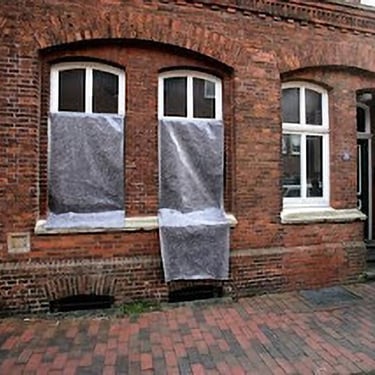
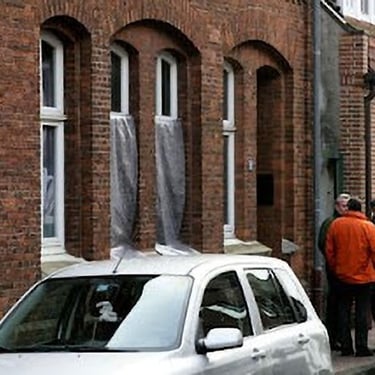
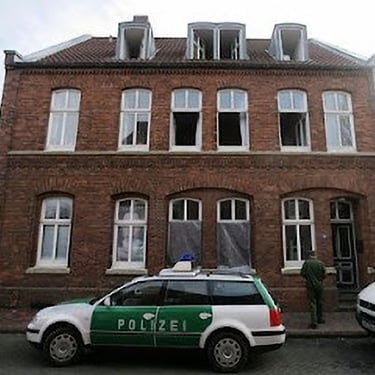
When police entered Matthias’s apartment, they were met with a horrific scene. The discovery sent shockwaves throughout the community and quickly made headlines across Germany. The local police chief described it as “one of the most disturbing crimes we have ever encountered.”
Authorities found Bianca’s personal belongings, several weapons, and Matthias’s computer, which contained the photos he had posted online. These images, though quickly removed, spread briefly across obscure online forums, further traumatizing Bianca’s family and fueling a heated discussion about internet regulation and digital desensitization.
Public outrage grew when it became clear that Matthias had shown warning signs for months — violent fantasies, obsessive behavior, and an unhealthy fixation on Bianca. Yet no one had intervened.
A Town in Shock
Leer, a peaceful town in Lower Saxony with a population of around 35,000, was not used to violent crime. The murder shattered the sense of safety its residents once felt. Local media described it as a “crime that left a permanent scar” on the community.
Neighbors reported that Matthias had always seemed “quiet, introverted, and polite.” Few could have imagined that behind the closed doors of his apartment, such darkness was brewing.
Bianca’s funeral drew hundreds of mourners. Friends, family, and strangers gathered to grieve not only her loss but the horrifying manner in which her life was taken. For many, it was a wake-up call about the dangers of unrecognized obsession and untreated psychological instability.
MORE PHOTOS OF THE ARRIVAL OF THE POLICE AND THE SUICIDE OF MATTHIAS:
The Psychology of Obsession and Rejection
Experts who later analyzed the case identified signs of rejection-sensitive aggression — a psychological phenomenon in which individuals respond to perceived rejection with intense anger and violence. In Matthias’s case, this may have been intensified by erotomanic delusions — the belief that another person secretly reciprocates one’s affection.
Dr. Anja Müller, a forensic psychologist from Bremen, commented at the time,
“Cases like this demonstrate how fragile the line is between love and control. What he felt was not love — it was possession. When she refused him, it shattered his identity. In his mind, if he couldn’t have her, no one could.”
Such cases underline how obsession often disguises itself as affection, and how society frequently dismisses early signs of possessiveness as merely “passion” or “romantic intensity.”
The Digital Aftermath
The fact that Matthias posted images of the crime online horrified investigators and reignited conversations about the internet’s role in amplifying violent acts. Law enforcement struggled to contain the spread of the images, which had been shared among small but active online communities fascinated by death and horror.
This behavior, experts noted, was not about fame but about control — a final attempt by Matthias to turn his violence into something permanent.
“Uploading those images was a way for him to immortalize his power over her,” said a cybercrime analyst. “It was as if he wanted the world to witness what he had done — to make his act inescapable, even in death.”
The disturbing online aftermath made it even harder for Bianca’s loved ones to grieve in peace. Some users attempted to trace and delete the images out of respect, while others used the tragedy to call for tighter monitoring of violent content.
A Reminder Ignored Too Often
The murder of Bianca Brust stands as a grim reminder of how easily obsession can masquerade as love — and how dangerous it becomes when unchallenged. Too often, society romanticizes jealousy, calling it “devotion,” when in truth it is a symptom of control and insecurity.
Had the early warning signs been recognized, had someone intervened, Bianca might still be alive. Her death serves as both tragedy and cautionary tale — about the necessity of taking threats seriously, of recognizing manipulation, and of understanding that love without boundaries can become violence.
In Memory of Bianca
Today, more than a decade later, the name Bianca Brust is still remembered by true crime historians and those who advocate for domestic violence and stalking prevention. Her story is not just about her death, but about what it revealed — that behind the mask of affection, obsession hides, waiting for rejection to ignite it.
While her killer’s name has faded into infamy, Bianca’s legacy remains one of remembrance and warning. She is the face of every woman who trusted too deeply, forgave too easily, and paid with her life.
Conclusion
The heartbreaking tale of Bianca Brust serves as a cautionary reminder of the potential consequences of unrequited love and jealousy. It highlights the importance of mental health awareness and the necessity of addressing emotional distress before it escalates into violence. Discussions surrounding such incidents must be had within our communities to foster understanding, prevention, and ultimately, the protection of innocent lives. The tragedy that unfolded in Leer is not just a story of violence; it is a stark reminder of the fragility of life and the unpredictable outcomes of human emotions.
Disclaimer:
Some details in this article have been exaggerated or stylized for dramatic and horror-focused storytelling purposes. This piece is intended strictly for entertainment within the dark, horror-true-crime genre and is NOT meant to mock, disrespect, or diminish the real tragedy of anyone's situation or circumstances. Our deepest condolences remain with the victim's family, friends, and loved ones.















Despair
A dark exploration of societal decay and despair.
Void
+1234567890
© 2025. All rights reserved.
Any comments, business inquiries, ideas, or stories, let us know