
The Legacy of Gernot Reinstadler: Safety Changes in Alpine Skiing
In January 1991, Austrian ski racer Gernot Reinstadler, a promising young downhill competitor, died after a training crash during qualification at the Lauberhorn race in Wengen, Switzerland. While entering a high-speed curve known as Ziel-S, his ski caught in safety netting, causing a catastrophic pelvic fracture and internal bleeding. Despite emergency surgery and multiple transfusions, he succumbed to his injuries later that night in Interlaken. His death led to the cancellation of the 1991 race and spurred significant safety improvements in alpine skiing, including finer-mesh barriers and course revisions to protect future competitors.
DISTURBING CASESGRIM REALITYNSFWOUR DREADFUL WORLD
12/15/20256 min read
RED SNOW & HUMAN ERROR: HOW GERNOT REINSTADLER OUTRAN EVERYTHING EXCEPT THE MOUNTAIN
Gernot Reinstadler fell in love with skiing the way some people fall in love with fire — mesmerized, warned repeatedly, and convinced it would never burn him. Growing up surrounded by mountains, he didn’t see them as obstacles. He saw them as invitations. Cold, steep, unforgiving invitations that whispered, go faster.
As a kid, skiing was a symbol of freedom. As a teenager, it became an obsession. While others skied for fun, Gernot skied like he was trying to disappear into the slope. Speed wasn’t a thrill — it was silence. The faster he went, the less room there was for fear, doubt, or second thoughts. Gravity became his therapist. Ice was cheaper than medication.
By the time he entered competitive alpine skiing, the warning signs were already there. He chased lines that made coaches nervous and teammates quiet. Near-misses weren’t wake-up calls — they were confidence boosters. If you survive enough times, you start to believe the mountain owes you one.
It doesn’t.
Professional skiing sells a beautiful lie: that discipline, talent, and preparation can control chaos. Gernot bought into it fully. He trained hard, pushed limits, and treated danger like a math problem — something that could be calculated, managed, and reduced. The mountain, meanwhile, waited patiently. It always does.
The day of the crash didn’t feel special. No dramatic weather. No cinematic buildup. Just another run. Another moment where speed felt normal, and caution felt unnecessary. Conditions were fast — the kind racers love, and medics hate. Somewhere between confidence and physics, the margin disappeared.
What followed was immediate and irreversible.
There was no heroic struggle, no second chance. One mistake at extreme speed is all it takes. The mountain doesn’t scream. It doesn’t warn. It just ends the conversation. Gernot Reinstadler died where he had spent his life trying to feel most alive.
The ski world reacted the way it always does: shock, tributes, reflective silence — followed by moving on. Because the sport demands it. Every season needs new names, and tragedy is just background noise beneath the lift lines.
Some called it fate. Others called it risk. The truth is uglier and simpler: elite skiing is flirting with a loaded gun while pretending it’s a stopwatch. Eventually, the math stops working.
Gernot didn’t die because he was careless. He died because he believed mastery could outpace mortality. Dark humor aside, that belief is common — and deadly. The mountain doesn’t care how passionate you are. Or how talented. Or how loved.
It only cares about speed, angle, and impact.
And when it’s done, it erases you cleanly — leaving nothing but disturbed snow and a story people tell as a warning… until the next person decides they’re different.
Tragic Events at the Lauberhorn Race
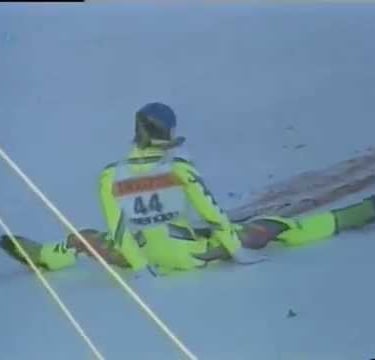
In January 1991, the world of alpine skiing faced a tragic event that would forever impact the sport. Austrian ski racer Gernot Reinstadler, a promising downhill competitor, lost his life following a devastating accident during the qualification round of the Lauberhorn race in Wengen, Switzerland. During a high-speed maneuver at a notoriously challenging curve known as Ziel-S, Reinstadler's ski collided with safety netting, which resulted in a catastrophic pelvic fracture and severe internal bleeding.
WHITE NOISE ON ICE: THE FATAL DESCENT OF GERNOT REINSTADLER
For every sport that brushes up against danger, there are ghosts in its history — athletes whose names become warnings whispered in locker rooms and coaching tents. Among alpine skiing’s most haunting stories is that of Gernot Reinstadler, a young Austrian downhill racer whose crash in 1991 sent shockwaves through the skiing world and changed safety standards forever.
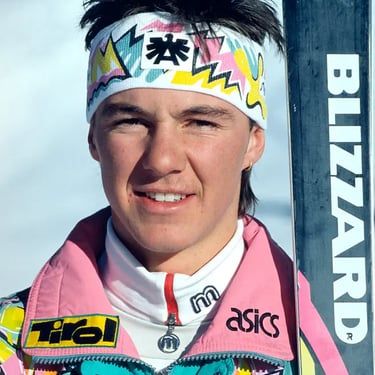
Reinstadler was not just another competitor on the World Cup circuit. Born on August 24, 1970, in Austria, he had quickly risen through the ranks as one of the most promising talents on the Austrian downhill team. Veterans described him as fearless and technically gifted, a “downhiller of the future.” (Grokipedia)
But on January 18, 1991, during a qualifying run for the Lauberhorn downhill race in Wengen, Switzerland, everything changed. The Lauberhorn is notorious — not for clichés, but for brutal honesty. At nearly 5 kilometers, it is one of the longest and fastest courses in the alpine calendar, demanding unwavering focus and razor-sharp precision. (Wikipedia)
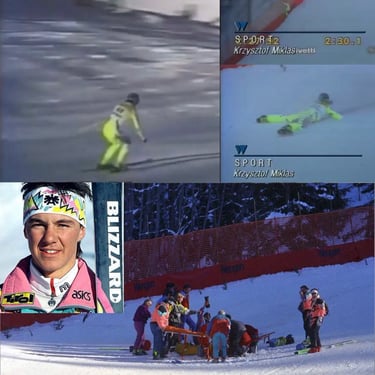
Approaching a tricky final section known as the Ziel-S — a sweeping, high-speed S-shaped curve mere moments from the finish line — Reinstadler lost control. Traveling at top speed, his ski caught the coarse-mesh safety netting designed to protect racers from tumbling off course. Instead of absorbing impact, the netting trapped the ski tip. The result was catastrophic: a violent twist of his lower body caused a severe pelvic fracture and massive internal injuries, compounded by substantial bleeding that would later prove fatal. (UPI)
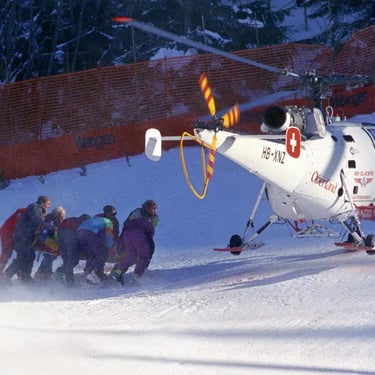
Medical teams reacted quickly, administering urgent stabilization at the scene before airlifting him to the hospital in Interlaken. Surgeons fought for hours, performing extensive surgery and multiple blood transfusions in a desperate attempt to stop the internal hemorrhaging. But the injuries were too severe, and Reinstadler died later that night. (UPI)
What shocked many was not just his death — tragic as it was — but the circumstances around it. In competitive alpine skiing, safety nets are supposed to be the last line of defense, a buffer between speed and disaster. In this case, however, they became a trap. One ski tip, snagged at the wrong moment, acted like a lever against human flesh and bone. In the unforgiving physics of elite downhill skiing, that was all it took. (Alpine Racers)
The impact rippled through the sport. The 1991 Lauberhorn race was cancelled entirely, a rare and somber decision for an event with deep tradition. Later that season, the International Ski Federation (FIS) moved to revise safety protocols and equipment standards. Netting meshes were made finer, qualifying procedures were reconsidered, and the design of high-risk downhill sections was modified to reduce the likelihood of similar entanglements. (Wikipedia)
For teammates and rivals, the loss hit hard. Olympic veterans and national legends expressed the raw, unfiltered fear that sometimes lurks just beneath the bravado of downhill competition: that even the best preparation and physical conditioning are no match for the tremendous forces unleashed at speeds often exceeding 80 miles per hour. (Grokipedia)
Reinstadler’s death also left a visible mark on the Wengen course itself. Organizers reworked the finish area where the crash occurred, installing rejection canvas and adjusting gate placements to help keep skis from snagging the protective barriers. These changes, while technical, were born of collective grief — a community absorbing a brutal lesson through loss. (Alpine Racers)
In the years that followed, a memorial plaque was placed near the finish line in Wengen, honoring a young man whose life was brimming with potential. His family’s grief — especially that of his mother, Traudl Reinstadler — was compounded by the surreal nature of his death. Recounting the moment she heard the news decades later, she described it as a feeling of being stabbed in the heart — a brutal metaphor that captured how sudden and inexplicable the tragedy felt. (blue News)
The wider skiing community reacted with introspection. Downhill racing, by its very nature, demands athletes to flirt with danger. It is a sport where balance must forever be negotiated with gravity, where the margin for error shrinks with every kilometer per hour gained. Reinstadler’s accident forced competitors and fans alike to confront a paradox: the very elements that make downhill skiing thrilling are the same forces that can obliterate a career — or a life — in an instant.
In retrospect, his death stands out not just as a moment of tragedy, but as a turning point. The safety improvements implemented in its wake would go on to protect countless athletes. The sport mourned, but it also learned, reminding everyone that modern competitive skiing remains a study in managed risk — a conversation between control and chaos.
Yet despite the statistics and the technical reforms, the memory of Gernot Reinstadler remains visceral. The Lauberhorn course still sings with speed, and every racer who negotiates the Ziel-S knows without saying it that the mountain keeps its own ledger of those it has taken. The snow remembers. The nets remember. And the legacy of a young man once poised for greatness continues to echo every time a racer carves into descent, chasing the thin line between glory and catastrophe. (Wikipedia)
Sources
Wikipedia — Gernot Reinstadler (bio & crash details) — en.wikipedia.org/wiki/Gernot_Reinstadler (Wikipedia)
UPI Archive — Austrian downhiller dies from injuries — upi.com/Archives/1991/01/19 … (UPI)
Bluewin.ch — 30 Jahre tragédie am Lauberhorn — bluewin.ch/sport/ski-wintersport/die-tragoedie-im-ziel-s-535417.html (blue News)
In January 1991, Austrian ski racer Gernot Reinstadler, a promising young downhill competitor, died after a training crash during qualification at the Lauberhorn race in Wengen, Switzerland. While entering a high-speed curve known as Ziel-S, his ski caught in safety netting, causing a catastrophic pelvic fracture and internal bleeding. Despite emergency surgery and multiple transfusions, he succumbed to his injuries later that night in Interlaken. His death led to the cancellation of the 1991 race and spurred significant safety improvements in alpine skiing, including finer-mesh barriers and course revisions to protect future competitors. (Nhà Hàng Món Huế)
Disclaimer:
Some details in this article have been exaggerated or stylized for dramatic and horror-focused storytelling purposes. This piece is intended strictly for entertainment within the dark, horror-true-crime genre and is NOT meant to mock, disrespect, or diminish the real tragedy of anyone's situation or circumstances. Our deepest condolences remain with the victim's family, friends, and loved ones.
Despair
A dark exploration of societal decay and despair.
Void
+1234567890
© 2025. All rights reserved.
Any comments, business inquiries, ideas, or stories, let us know