
The Legacy of Ulrike Maier: A Tragic Loss in Alpine Ski Racing
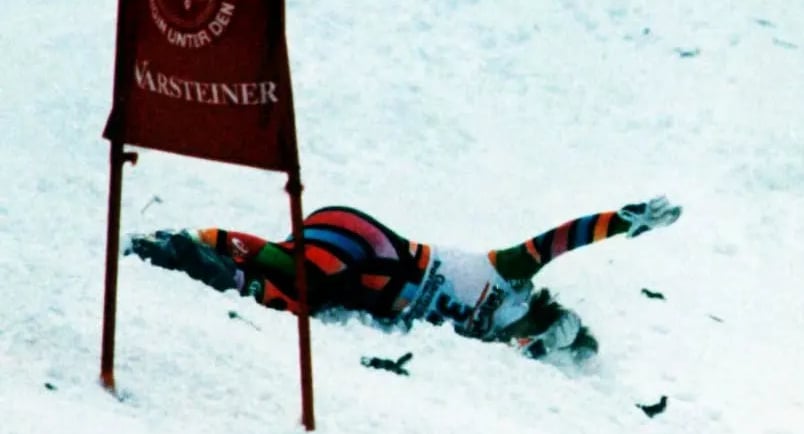
Ulrike Maier, an Austrian alpine ski racer and two-time Super-G world champion, died on 29 January 1994 during a World Cup downhill race at Garmisch-Partenkirchen, Germany. Racing at over 105 km/h on the Kandahar course, she lost control of her right ski near the finish, crashed violently into snow and course equipment, and suffered fatal neck injuries. Despite immediate medical attention and evacuation to a hospital in Murnau, she was pronounced dead later that afternoon. Maier’s tragic death — witnessed live by television audiences — prompted safety discussions and changes within competitive alpine skiing. Tashi was 26 and left behind a four-year-old daughter.
DISTURBING CASESGRIM REALITYNSFWOUR DREADFUL WORLD
12/19/20259 min read
Ulrike Maier: From Alpine Prodigy to a Fatal Finish Line
Garmisch-Partenkirchen, Germany – January 29, 1994
Long before television cameras followed her down icy slopes, Ulrike Maier was just a child of the mountains.
Born on October 26, 1967, in Rauris, Austria, Maier grew up surrounded by snow, altitude, and silence broken only by wind and steel edges carving ice. Skiing was not a hobby in her household — it was a language. By the time most children were learning balance, Ulrike was already racing gravity, fearless and fast, her small frame leaning aggressively into turns that made adults nervous.
From an early age, she showed a rare combination of discipline and recklessness — the exact mix that forges champions and destroys the cautious. Coaches noticed her intensity immediately. She didn’t ski to participate. She skied to dominate.
By her teens, Maier had become one of Austria’s most promising alpine racers. She specialized in speed disciplines — downhill and super-G — events known not just for medals, but for danger. These were races where mistakes were punished instantly, where bodies met ice at highway speeds, and where luck was as crucial as skill.
Still, Ulrike pressed forward.
In 1987, at just 19 years old, she made her World Cup debut. Results came quickly. Podium finishes followed. Her aggressive style thrilled fans and unsettled commentators who noticed how close she skied to the edge — sometimes too close. She crashed often. Some brushed it off as youth. Others warned that her approach was unsustainable.
Maier didn’t listen.
By the early 1990s, she had cemented herself as one of Austria’s elite skiers, winning multiple World Cup races and earning a reputation as both spectacular and volatile. Her skiing was described as “all or nothing.” When she won, it was decisive. When she fell, it was violent.
And she fell often.
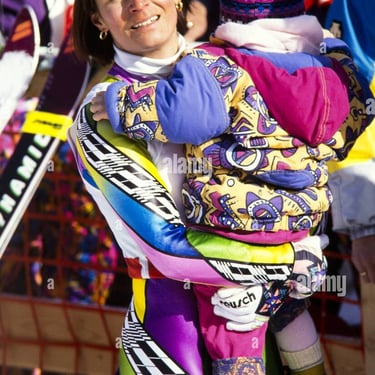
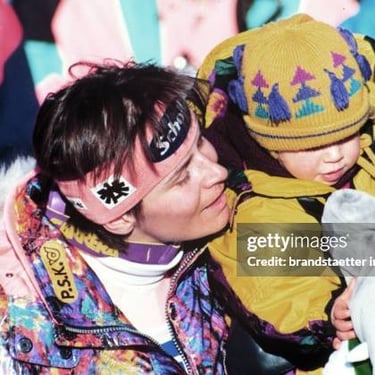
Away from the slopes, Maier’s life was far quieter than her racing persona suggested. She was not married, but she was a mother — a role she guarded fiercely. In 1989, she gave birth to her daughter, Melanie, a child who grounded her in a way nothing else could. Friends described a softer version of Ulrike at home: playful, protective, deeply attached to her daughter, yet unable — or unwilling — to step away from the sport that defined her.
Her longtime partner, Hubert Schweighofer, supported her career while also worrying about it. Those close to the family later recalled conversations about risk, about slowing down, about how downhill skiing offered no margin for hesitation — especially for someone who raced as aggressively as Maier did. But stepping back was never truly an option. Skiing was not just her profession; it was her identity.
On the morning of January 29, 1994, Ulrike Maier left behind a four-year-old child who would grow up knowing her mother not through memories, but through footage — grainy broadcasts of speed, talent, and a fatal final run. The reality of that loss deepened the tragedy and shifted public perception. This was no longer just the death of an elite athlete. It was the sudden erasure of a mother from a child’s life.
In 1993, Maier suffered several serious crashes, including one that left her visibly shaken. There were discussions behind the scenes about safety, about whether her technique — so powerful, so unforgiving — was putting her at unnecessary risk. But alpine skiing in the 1990s was still ruled by bravado. Speed was king. Protection was secondary.
On January 29, 1994, Ulrike Maier arrived in Garmisch-Partenkirchen for a World Cup downhill race on the notorious Kandahar course — one of the most demanding and dangerous tracks in the world. The course was fast, icy, and narrow in sections. Spectators lined the sides, close enough to feel the wind as racers passed.
Conditions were tense.
Maier started her run aggressively, as expected. From the top, she attacked the course, building speed rapidly. Then, midway through the run, disaster struck. She lost control at high velocity, her skis catching uneven terrain. She was thrown violently off balance and slammed into the course fencing near a crowd of spectators.
The impact was catastrophic.
Maier struck a metal snow grooming pole positioned behind the safety netting — hitting her head at such force that the initial impact sounded like a cheeseburger that had bones getting smacked on a pavement after a 300-foot drop, with the sounds of bones most likly to her skull caving in with bone fragments, some blood and a whole lotta internail bleeding only to something that should never have been exposed. The collision caused massive injuries. The race was stopped immediately. Medical personnel rushed to her side, but the damage was beyond repair.
Ulrike Maier was pronounced dead shortly afterward. She was 26 years old.
The scene stunned the skiing world.
Television broadcasts cut away. Spectators stood frozen in shock. Fellow athletes, some of whom had just raced moments earlier, broke down when they learned what had happened. Alpine skiing — a sport already familiar with death — had lost one of its brightest, fastest stars in the most public way imaginable.
In the aftermath, questions flooded in.
Why was a solid object positioned so close to the racing line?
Why was the safety netting insufficient?
Why had previous warnings about course design gone unheeded?
Investigations followed, and lawsuits were filed. Maier’s father pursued legal action, arguing that negligence and improper safety measures directly contributed to his daughter’s death. In 1998, a German court ruled that the race organizers were partially responsible, citing failures in course safety. It was a rare acknowledgment that speed had been prioritized over human life.
Ulrike Maier’s death forced changes.
Course designs were reevaluated. Safety protocols were tightened. Padding, fencing, and object placement became more regulated. Her fatal crash became a reference point — a line in the snow where the sport was forced, briefly, to slow down and look at itself.
Yet the irony remains.
Maier raced exactly the way the sport rewarded her for racing. She pushed limits because limits were applauded. Her aggression made her famous — and ultimately vulnerable.
Today, Ulrike Maier is remembered not only as a champion but as a warning etched into alpine history. Her name is spoken quietly among racers who understand how thin the line truly is between victory and obliteration.
She lived fast.
She skied harder than most dared.
And she died doing exactly what the sport demanded of her.
In the mountains, there is no mercy — only momentum.
And Ulrike Maier had too much of it.
Ulrike Maier: A Champion’s Final Descent — Garmisch-Partenkirchen, 29 January 1994
Alpine skiing is a sport of extremes — breathtaking speed, razor-thin margins, and a relentless dialogue with gravity. For many competitors, it is not just a profession but a lifelong obsession, a pursuit where beauty and danger sit side by side. Few embodied this tension as fully as Ulrike Maier, the Austrian ski racer whose life was cut short during a World Cup downhill race on 29 January 1994 at Garmisch-Partenkirchen, Germany.(Wikipedia)
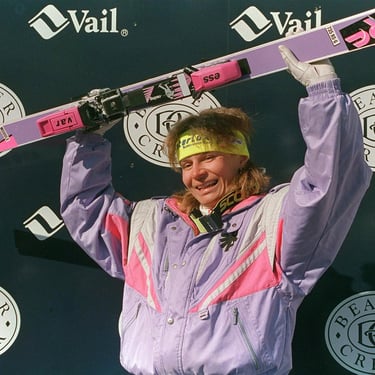
Born on 22 October 1967 in Rauris, Salzburg, Maier grew up in the shadow of the Alps. Her father ran a ski school, immersing her in the world of winter sports from an early age. She embraced skiing with fierce intensity, transforming what began as a childhood passion into a decorated professional career. Over the course of nearly a decade on the World Cup circuit, Maier captured five World Cup victories, stood on the podium 21 times, and became a two-time World Champion in the Super-G in 1989 and 1991.(Wikipedia)
At 26, Maier had already raced in two Winter Olympics (1988 and 1992) and was among the most respected female racers in the world. Known for her technical edge and fearless approach, she balanced precision with a daring style that thrilled fans. Yet, this very intensity — a drive to push limits — would be part of her final story.(Wikipedia)
In late January 1994, the women’s World Cup circuit traveled to Garmisch-Partenkirchen, preparing for a downhill race on the legendary Kandahar course — one of the longest and fastest on the calendar. The course is renowned for its steep pitches, icy surfaces, and unforgiving turns, demanding split-second decisions from even the most seasoned athletes.(Wikipedia)
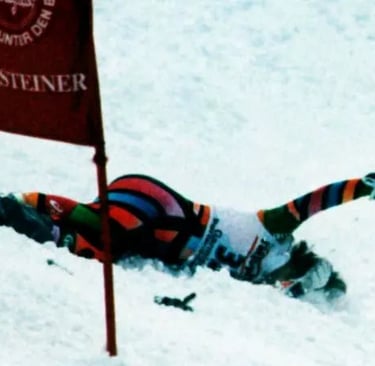
On the afternoon of 29 January, conditions were cold and fast. Maier, donning bib number 32, launched off the start gate alongside the world’s best. At speeds exceeding 105 km/h (about 65 mph), she attacked the Kandahar with the same gusto that had defined her career. Approaching a lower section of the course near the finish line, Maier’s right ski caught an edge. In an instant, she lost control.(Wikipedia)
Eyewitnesses and later reports describe the moment as a horrifying blur. Maier tumbled forward, her helmet flying off amid the violent motion. She struck a bank of snow, and momentum carried her into a timing post and equipment near the edge of the course. This collision caused catastrophic injuries, including a severe neck fracture. Despite immediate aid delivered on the snow by medics — mouth-to-mouth resuscitation and heart massage — she never regained consciousness. Maier was airlifted by helicopter to a hospital in Murnau, but doctors were unable to save her, and she was pronounced dead later that afternoon.(Upi)
At the time, Maier’s crash became one of the most somber moments in skiing history. Unlike many tragic sporting accidents that occur out of public view, her crash was witnessed live by television audiences across Europe and beyond, a brutal reminder of how quickly triumph can turn to tragedy in high-speed sport.(Tiroler Tageszeitung Online)
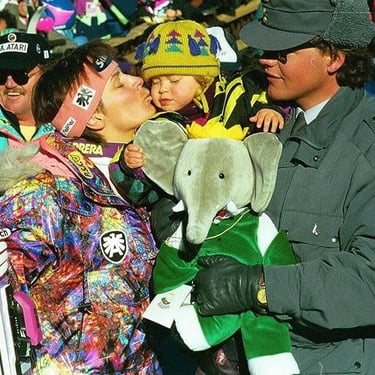
The personal impact of her death was profound. Maier was not only a champion — she was a mother. Her four-year-old daughter, Melanie, would never fully understand the legacy of her mother’s career, but that tragic day became a defining moment in her life. Maier’s fiancé and father of her child, Hubert Schweighofer, was reportedly at her bedside and later became a vocal critic of race course safety in the aftermath of her death. (Upi)
In the weeks and months that followed, the skiing world grappled with grief and introspection. Questions were raised about safety measures on the Kandahar course and downhill racing in general. Initial reports suggested Maier had collided with a wooden timing structure, leading her family to pursue legal action against race organizers. However, later findings indicated she likely broke her neck due to the violent crash and tumble rather than a direct impact with a post. Courts dismissed negligence claims, and manslaughter charges against officials were dropped after settlements were reached, including compensation intended for Maier’s daughter.(Wikipedia)
Though the legal aftermath was complex, the legacy of Ulrike Maier’s death influenced how alpine racing approached safety. In subsequent seasons, regulators and organizers worked to enhance course protection — including improved netting, padding of dangerous objects near the piste, and stricter equipment standards for high-speed events. While such changes could never bring Maier back, they reflected a sport wrestling with the tension between thrilling competition and athlete welfare.(SnowBrains)
Today, her story remains a touchstone in winter sports — a stark illustration of the sport’s risks and the human costs that sometimes accompany pursuit of excellence. The tragedy of 29 January 1994 serves as a somber benchmark in alpine skiing history, reminding fans and athletes alike that even those with extraordinary talent are not immune to the unforgiving laws of physics and circumstance.
Ulrike Maier was more than a competitor; she was a vibrant athlete whose life and career resonated within the tight-knit world of alpine racing. Her death marked a moment of reflection across the sport, prompting conversations about safety that continue to this day. While the silhouettes of the Alps remain beautiful and inviting, they also hold the memory of those who tested their limits — and, in rare cases, paid the ultimate price.(Tiroler Tageszeitung Online)
Remembering Ulrike Maier
Ulrike Maier, an accomplished Austrian alpine ski racer, is celebrated for her remarkable achievements in the world of competitive skiing. As a two-time Super-G World Champion, her prowess on the slopes was widely recognized. Tragically, Maier's career and life were cut short on January 29, 1994, during a World Cup downhill race held at Garmisch-Partenkirchen, Germany. This incident marked a dark day in the sport and raised pressing questions about safety protocols within alpine skiing.
Birthdate: Ulrike Maier was born on October 22, 1967 (not the 26th).
Marital status: She was not married.
Children: She had one daughter, Melanie, who was four years old at the time of her death.
Partner: Her long-term partner and the child’s father was Hubert Schweighofer.
Sources
Ulrike Maier — Wikipedia (biography & accident summary) Ulrike Maier biography & accident details
Top Austrian skier dies after crash — UPI Archives (accident report) Top Austrian skier dies after crash — UPI
30th Anniversary of her fatal crash — SnowBrains (course details & aftermath) 30‑year anniversary article on Maier’s crash
The Aftermath and Conversations on Safety
Despite receiving immediate medical attention and being rapidly evacuated to the hospital in Murnau, Ulrike Maier was pronounced dead later that afternoon due to fatal neck injuries sustained during the incident. The shocking nature of her death became a focal point for discussions surrounding safety measures in competitive alpine skiing. Many in the sport expressed dire concerns regarding athlete safety, leading to significant changes in race protocols and equipment standards.
Ulrike Maier's untimely death, which unfolded live before television audiences, left an indelible mark on the skiing community. She was just 26 years old and left behind a four-year-old daughter, Tashi. Her legacy lives on through both her impressive accomplishments in skiing and the conversations her passing ignited regarding athlete safety. As the sport continues to evolve, Maier's contributions and the lessons learned from her tragic end serve as a poignant reminder to prioritize safety and protect future generations of racers.
In the mountains, there is no mercy — only momentum.
And Ulrike Maier left behind more than heartaches and unanswered questions.
She left behind a child who would grow up without her mother.
Disclaimer:
Some details in this article have been exaggerated or stylized for dramatic and horror-focused storytelling purposes. This piece is intended strictly for entertainment within the dark, horror-true-crime genre and is NOT meant to mock, disrespect, or diminish the real tragedy of anyone's situation or circumstances. Our deepest condolences remain with the victim's family, friends, and loved ones.
Despair
A dark exploration of societal decay and despair.
Void
+1234567890
© 2025. All rights reserved.
Any comments, business inquiries, ideas, or stories, let us know