
The Journey of Resilience: Samuel Koch's Inspiring Transformation After Tragedy
In December 2010, Samuel Koch’s life changed forever during a live broadcast of Wetten, dass..? when a dangerous stunt went tragically wrong. Left tetraplegic after a spinal cord injury, Koch became a symbol of both the risks of spectacle-driven entertainment and the resilience of the human spirit. This article explores his upbringing, the horrific on-air accident, and how he rebuilt his life afterward—becoming an author, speaker, husband, and father. It’s a story not just about survival, but about redefining purpose after unimaginable loss.
DISTURBING CASESGRIM REALITYFAITHHOPENSFWOUR DREADFUL WORLD
1/29/20267 min read
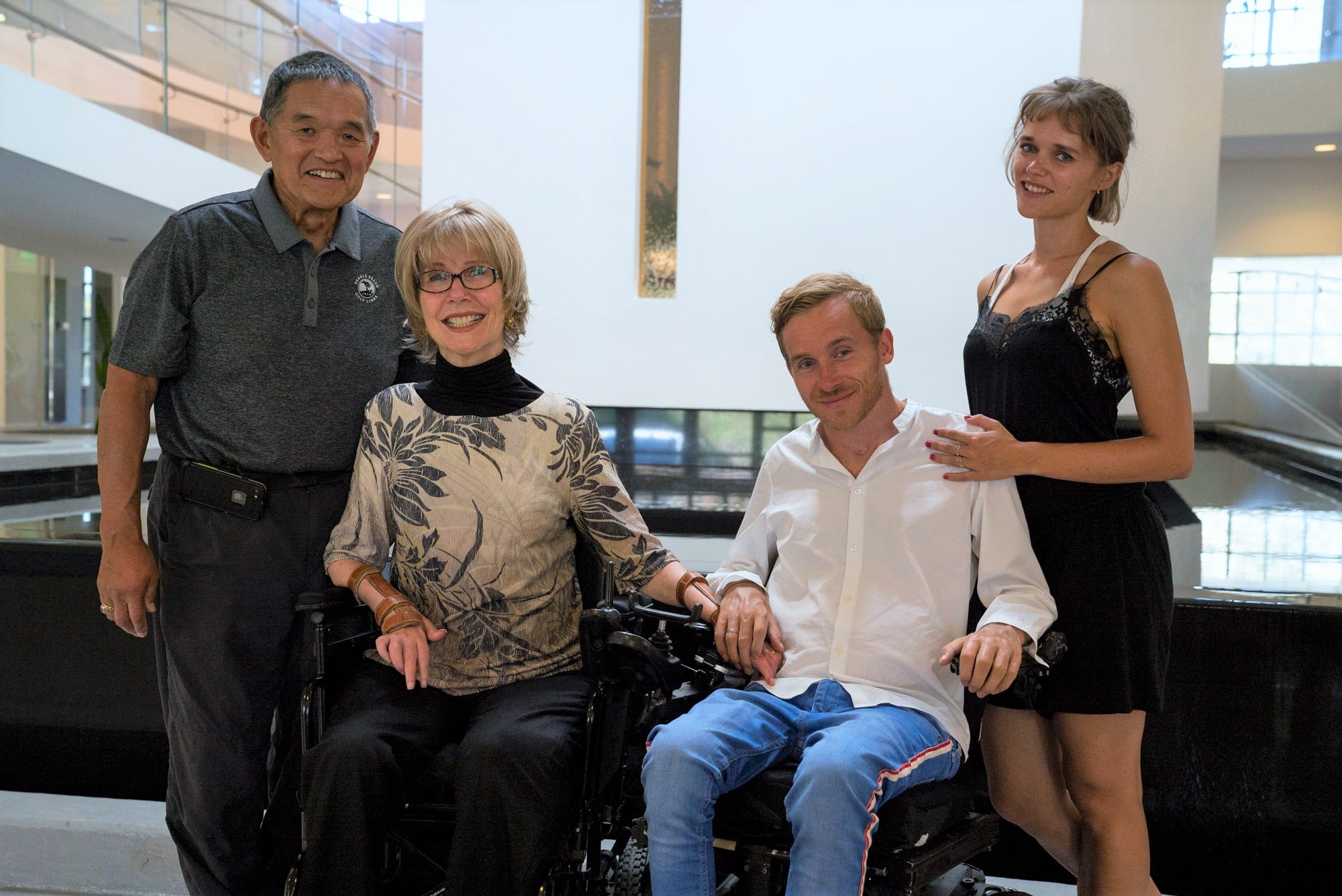
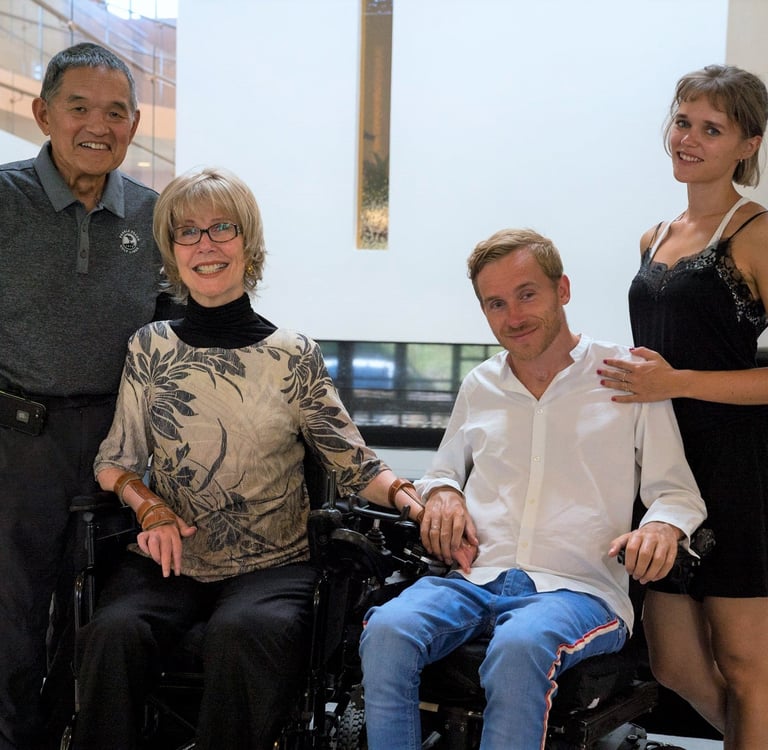
When a Leap Becomes a Nightmare: The Samuel Koch Story
I grew up believing my body was something I could trust.
From the time I was a child, movement was my language. I learned early how to fall without fear, how to push pain aside, how to calculate risk down to muscle memory. Gymnastics wasn’t about danger to me—it was about control. Discipline. If I listened closely enough to my body, it would never betray me. That’s what I believed. That’s what I built my life on.
On December 4, 2010, I stepped onto a television stage with that belief intact.
The studio was warm. Too warm. The lights made everything feel unreal, like standing inside a dream you don’t fully trust. I could hear the audience breathing, laughing, waiting to be impressed. My father sat behind the wheel of one of the cars. That detail mattered more than anyone realized. It anchored me. If he was there, everything would be fine. That’s what I told myself.
They counted me down.
The first jump felt perfect. My body answered immediately—spring, arc, landing. Applause washed over me like confirmation. The second jump came just as clean. My heart was racing now, but in a familiar way. This was my element. This was what I was made for.
By the third car, something shifted. I felt it before I understood it. The timing wasn’t exact. My boots felt heavier. The floor felt farther away. I told myself it was nerves. I told myself I was still in control.
I was wrong.
I launched toward the fourth car and knew midair that I had miscalculated. There was no time to correct it. No room to adjust. My body—my obedient, trained, faithful body—stopped listening.
Impact.
I don’t remember pain at first. I remember sound. Metal. A hollow crack that felt like it came from inside my head. Then the floor rushed up and swallowed me whole. My face pressed against it. Cold. Hard. Final.
I tried to move.
Nothing happened.
I tried again—harder this time. I screamed inside my own skull, ordering my arms, my legs, anything to respond. They didn’t. The silence inside my body was louder than the audience had been moments earlier.
I could hear people shouting. Someone said my name. Someone else said not to move, which was almost funny—I couldn’t have moved if my life depended on it. My breath came shallow and wrong. I realized, with a clarity that still haunts me, that something irreversible had just occurred.
The show stopped. My life didn’t pause—it shattered.
Later, they told me what my body already knew. My spine was broken. My spinal cord damaged beyond repair. Tetraplegia. Neck down. Words that felt clinical, clean, nothing like the reality they described. I had spent my entire life mastering movement, and in seconds, it had been taken from me in front of millions.
Waking up afterward was worse than the fall.
I opened my eyes and felt trapped inside myself. I could think. I could feel fear. I could feel grief. But I could not lift a hand to wipe my own tears. Breathing felt borrowed. Time slowed into something cruel. Every day forced me to mourn the person I had been while learning how to exist as someone entirely new.
People called me brave. Strong. Inspirational.
What they didn’t see were the nights I lay awake screaming silently, replaying that jump over and over. The moment my body betrayed me. The realization that entertainment had demanded a sacrifice—and I had been willing to give it.
I survived.
But survival isn’t victory. It’s an adaptation. It’s learning how to speak when you can’t move, how to create meaning when the thing that defined you is gone. I write now. I speak. I exist deliberately. I refuse to let that night be the only thing people remember.
Still, when I close my eyes, I’m back in the air.
And I know exactly when everything ends.
Here’s the next part, still first-person, still raw—but turning toward meaning instead of just impact.
What no one tells you about losing everything is this: once the wreckage settles, you finally see what was never visible before.
In the beginning, all I could see was what was gone. Movement. Independence. The future I had rehearsed since childhood. Every mirror became an accusation. Every memory of my old body felt like a taunt. I hated the word acceptance because it sounded like surrender.
But something unexpected happened as the days stacked into months.
I was still here.
I learned that my breath still mattered. That my voice still carried weight. That even without motion, I could still move people. I began to write—not because I wanted to inspire anyone, but because if I didn’t pour the noise out of my head, it would drown me. Words became my new muscle memory. Sentences replaced somersaults.
And slowly—agonizingly slowly—purpose returned.
I realized that what happened to me wasn’t just an accident. It was a mirror held up to a culture obsessed with spectacle, danger, and applause. I didn’t want to be remembered as “the guy who broke his neck on live TV.” I wanted to be remembered as someone who refused to disappear afterward.
Today, my life looks nothing like the one I imagined—but it is still a life worth fighting for.
I am a writer now. A speaker. A husband. A man who wakes up every morning and chooses meaning over bitterness. I talk about responsibility, about risk, about the thin line between entertainment and exploitation. I talk about dignity. About how a human being is never a stunt, never a prop, never disposable.
I don’t walk—but I move forward.
I don’t jump—but I still leap, just differently.
The accident didn’t end my life.
It stripped it down to its bones and asked me a question:
Who are you when everything that defined you is gone?
My answer is still unfolding—but for the first time, I’m not afraid of that.
I survived.
I adapted.
And I am still here.
That night didn’t just break my body.
It exposed a system that mistakes danger for entertainment and applause for consent.
I don’t blame a single person—but I refuse to pretend it was “just bad luck.”
It was pressure. Speed. Cameras. Expectations.
A countdown that never asked what the cost might be after the clapping stopped.
If you’re watching this, remember: no stunt, no challenge, no viral moment is worth a human life.
We are not disposable content.
And survival—real survival—is not about standing up again.
It’s about choosing to live after the fall.
Samuel Koch: The Night German Television Stopped—and the Life That Continued
Samuel Koch was born on September 22, 1987, in Germany and grew up in a family deeply rooted in performance and creativity. His father worked in the medical field, and Samuel was drawn early to movement, rhythm, and physical expression. As a child and teenager, he trained as a gymnast and dancer, developing a deep trust in his body and its capabilities. Performance wasn’t just a passion—it was identity.
By his early twenties, Koch was studying drama and working toward a future in entertainment. That path brought him to Wetten, dass..?, one of Germany’s most-watched television programs, known for its daring stunts and high-risk spectacles. On December 4, 2010, Koch attempted a challenge involving spring-loaded “kangaroo boots,” leaping over moving vehicles during a live broadcast.
The stunt went catastrophically wrong.
While attempting to clear the fourth car—driven by his father—Koch’s timing failed. His head struck the vehicle, and he was thrown face-first onto the studio floor. The broadcast was immediately halted, marking the first time in the show’s decades-long history that a live episode was cut short due to an accident. Millions watched as confusion turned into shock.
Koch suffered multiple spinal fractures and a severe spinal cord injury. He was left tetraplegic, paralyzed from the neck down.
The aftermath rippled far beyond the studio. Host Thomas Gottschalk later resigned, stating he could not continue after what had happened. The incident triggered widespread debate in Germany about live television, stunt safety, and the ethics of entertainment built on risk.
For Samuel Koch, recovery was long, painful, and uncertain.
Yet over time, he rebuilt—not his body as it once was, but his life. Koch began writing, speaking openly about trauma, responsibility, and resilience. He authored several books, including Zwei Leben (“Two Lives”) and StehaufMensch! (“Get-Up Human”), reflecting on life before and after the accident. His writing rejected shallow inspiration in favor of honesty—acknowledging despair while refusing to live inside it.
Koch also returned to the arts, acting in theater productions and television roles, proving that disability did not end his creative voice. He became a sought-after motivational speaker, addressing topics such as risk culture, dignity, and redefining success beyond physical ability.
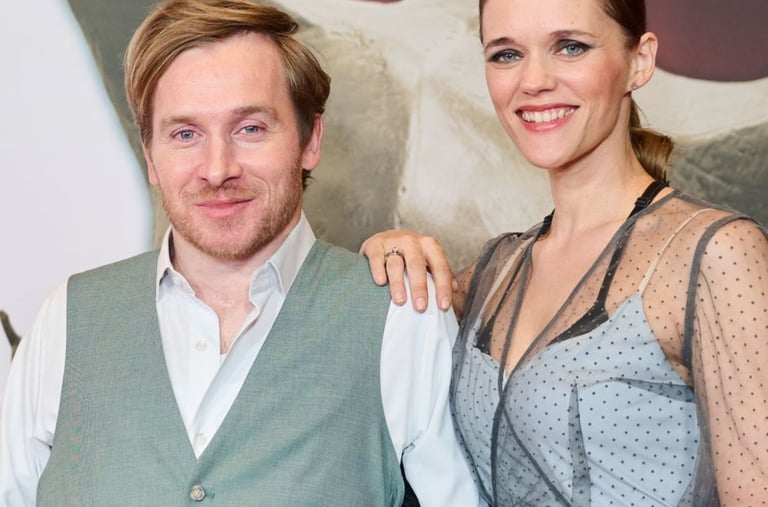
In 2016, Samuel Koch married actress Sarah Elena Timpe. Their relationship became a quiet but powerful testament to partnership beyond limitation. Together, they built a family, and Koch is now a father to two sons. He has spoken openly about the profound meaning fatherhood brought into his life—about presence, patience, and teaching his children that worth is not measured by performance.
Today, Koch continues to advocate for responsible media practices and greater inclusion for people with disabilities. He does not deny the horror of what happened—but he refuses to let that moment be the sum of who he is.
The accident stopped a television show.
It did not stop a life.
Samuel Koch’s story stands as both a warning and a testament: risk without reflection can destroy—but meaning, once rebuilt, can endure.
A Journey of Redefining Purpose
In the aftermath of the accident, Samuel Koch faced unimaginable adversity. However, instead of succumbing to despair, he embraced his new reality with remarkable bravery. Through intensive rehabilitation and unwavering determination, Koch not only worked towards regaining his independence but also began to redefine his purpose in life. He ventured into writing and motivational speaking, sharing his story and insights on resilience, determination, and hope.
His journey underscores not just the physical challenges he faced, but also the emotional and psychological battles inherent in such an irreversible change. Samuel's transition from stuntman to author and speaker showcases not only his personal growth but also his dedication to inspiring others who might be facing their own battles.
For more info about Samuel Koch and the accident, please click below:
https://www.bluewin.ch/en/entertainment/samuel-koch-becomes-a-dad-for-the-first-time-2973810.html
https://abcnews.go.com/Entertainment/stuntman-gravely-injured-live-german-tv-show/story?id=12324325
Captured live on German television, watch the terrifying moment Samuel Koch’s stunt goes horribly wrong. The jaw-dropping accident leaves him paralyzed in an instant, shocking the studio and millions of viewers at home. A raw, unfiltered glimpse into the horror of a life-altering accident no one was prepared for
Disclaimer:
Some details in this article have been exaggerated or stylized for dramatic and horror-focused storytelling purposes. This piece is intended strictly for entertainment within the dark, horror-true-crime genre and is NOT meant to mock, disrespect, or diminish the real tragedy of anyone's situation or circumstances. Our deepest condolences remain with the victim's family, friends, and loved ones.
Despair
A dark exploration of societal decay and despair.
Void
+1234567890
© 2025. All rights reserved.
Any comments, business inquiries, ideas, or stories, let us know