
Fifteen Floors Down: The Silence After the Stream
A 15-year-old girl stood at the edge of a rooftop in China, her phone trembling in her hand as thousands of watts of city light bled into the night. Moments later, she pressed “Go Live.” What followed wasn’t just a broadcast — it was a haunting confession, a desperate echo of pain wrapped in filters, likes, and ignorance. This article dissects her final moments, the silent warning signs that everyone ignored, and the unsettling beauty of a digital death witnessed in real time.
CHILD WARNINGDISTURBING CASESGRIM REALITYSINS OF THE FLESHNSFWOUR DREADFUL WORLD
10/27/20258 min read

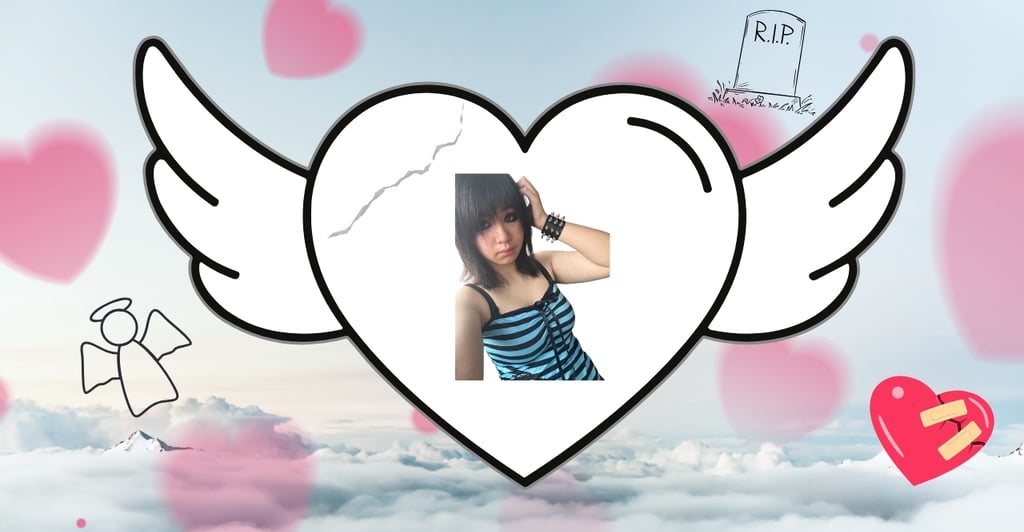
“The Last Stream of Li Hua”
I still remember the sound of the rain that night — faint, soft, like the world itself was whispering goodbye. Li Hua’s messages had grown darker for weeks, but I didn’t think she meant it. She was fifteen, dramatic, and fragile in the way most of us were — bruised by the world but still pretending we could laugh through it. Her posts had become confessions stitched in digital static. Every emoji was a cry for help disguised as a joke. Every picture was a mirror of something dying inside her.
We met in an online art group. She was always drawing sad girls — pale faces, black tears, angel wings made of blades. Sometimes she’d joke, “Maybe I’ll draw myself like this one day.” I laughed. I didn’t know.
That afternoon, she posted a video — standing on a rooftop, her phone tilted downward to the tiny city below. “Someday,” she wrote in the caption, “it won’t matter.” The comments were all emojis — skulls, hearts, laughing faces. No one took her seriously. We never do until it’s too late.
When the stream went live later that night, I almost didn’t click. But curiosity — that cruel, human thing — made me open it. The title was just one word: “Goodbye.”
She stood at the edge of a high-rise building in the city of Changsha, hair tangled by the wind, the neon lights staining her face blue and pink. Her phone was set up perfectly — like she had rehearsed it. Behind her, the song “Join Me in Death” by HIM played softly. There were only thirteen viewers. I was one of them.
At first, she didn’t say anything. She just looked into the camera and smiled — a faint, broken curve of her lips. Then she spoke, her voice trembling like glass. “I want to thank you all for being part of my life. I really do.”
She turned and stared out over the city. Then she picked up her phone and began reading something — her farewell letter, posted just minutes earlier on X.
“Everyone should know that I am about to end it. I have planned this day for at least five months. Every year I think about the same thing. I know I have nothing left. I know this is really stupid, but I really can’t hold on anymore. I am so tired, really tired. I am sorry, everyone. You have all cared about me so much. I have thought about it for a long time, and in the end I still decided to leave…”
Her words were calm, like she had already crossed some invisible line between the living and the dead. I typed in the chat, “Li, please stop. Please come down.” Others did too — some begging, some laughing.
“Please don’t come to join me,” she read. “I like you all very much. Please live well. See you in the next life.”
And then she smiled. That was the worst part — not the fall, not the silence that came after, but the smile. It wasn’t sadness. It was peace.
The phone tilted slightly as she set it down. She walked toward the railing, her shoes clicking against the concrete. The wind was howling through the microphone, distorting her song.
And then — she climbed. One leg. Then the other. She looked down.
Someone in the comments typed, “She won’t do it.”
She did.
The screen shook. There was a sudden scream from someone nearby — maybe the person who found her phone later. The live ended abruptly, replaced with the bland “Stream has ended” message.
I sat there for an hour staring at my reflection in the screen. I didn’t cry. Not at first. I just felt… empty. Like she had taken something from all of us — a piece of our digital guilt.
By morning, her account was gone. TikTok removed everything. Her school released a statement about “cyberbullying awareness.” Reporters showed up. Hashtags trended for a day, then disappeared into the noise.
But her letter — it kept circulating. Screenshotted, reposted, quoted out of context. Some said she was selfish. Some called her brave. None of them really knew her.
I think about her sometimes when I scroll late at night — that lonely scroll of infinite faces pretending to be okay. I wonder if she wanted to be remembered as a ghost or just forgotten as a girl who was tired of hurting.
All I know is this: she didn’t just fall. She was pushed by the silence, by the loneliness, by the world that doesn’t listen until someone is gone.
Maybe she just wanted to be seen one last time.
And the cruel truth is — she was.
Echoes from the Rooftop: The Final Broadcast of a Lost Girl
It was October 21, 2025.
A date that should have been just another ordinary day in China — a blur of city noise, neon lights, and endless scrolls through social media feeds. But for one fifteen-year-old girl, it was the day she chose to end her life, not in silence, but under the watchful, indifferent eyes of the internet.
She was dressed in black — layered clothes, eyeliner smudged thick, a reflection of the EMO subculture that once found meaning in melancholy. She stood at the edge of a tall rooftop, her phone trembling in her hand. The camera pointed downward first, then back to her face — a face too young to be burdened with so much despair. She hit “Go Live.”
The song Join Me in Death by HIM played faintly through her phone speaker — a haunting anthem from another generation’s darkness, recycled by a teenager born decades later, still resonating with the same suicidal romance.
Only thirteen people were watching.
Some commented. Some laughed. Others said nothing.
The live counter ticked upward and downward as if fate itself were scrolling past her cry for help. No one understood what they were witnessing — or perhaps, they didn’t want to.
Moments later, she climbed over the railing, looked down one last time, and let go.
In the aftermath, police confirmed her death. The building stood in the heart of an urban sprawl — anonymous, gray, and ordinary. Her fall drew a small crowd, but only briefly. Within hours, city workers cleaned the area. Life continued as if it hadn’t happened. But online, the fragments of her digital presence began to spread — screenshots, reposts, copies of her farewell letter shared across platforms, written in the trembling language of a girl who had been quietly dying for months.
“Everyone should know that I am about to end it. I have planned this day for at least five months… I’m sorry, everyone. You have all cared about me so much. I really can’t hold on anymore. I am so tired.”
It was not a confession — it was a resignation.
Her words carried no anger, no revenge, no demand for justice. They were the exhausted murmurs of someone who had long stopped believing there was a way out.
She apologized for existing.
She thanked everyone she knew.
And she begged them not to follow her.
In life, she had been fascinated by true crime and the darker corners of the internet. Her room — according to those who knew her — was cluttered with posters of fictional killers, crime documentaries playing softly in the background while she drew in notebooks filled with fragmented thoughts. She admired the rebellion of those who dared to reject the world, even if it destroyed them.
She had once written that she felt “invisible unless she was in pain.”
Her classmates said she often dressed differently — layers of black, oversized sweaters, streaks of red in her hair. To adults, it was “just a phase.” To her, it was identity, armor, confession, and warning all at once.
The EMO aesthetic — once mocked, now absorbed into the digital bloodstream — became her last language. Through music, makeup, and muted selfies, she tried to say what she couldn’t speak aloud: I hurt, and no one notices.
What makes her death so haunting isn’t just that it was broadcast live. It’s the indifference that surrounds it.
When she posted her first rooftop video earlier that day, it should have been enough to alarm someone. The comments filled with heart emojis and casual concern — “Be safe,” “Don’t do anything dumb” — yet no one reported it, no one reached out beyond the screen. In an era where tragedy has become aesthetic, despair becomes another form of performance art — scrollable, shareable, forgettable.
Her suicide wasn’t a sudden act of rage or impulse. It was ritualistic.
The letter. The song choice. The setting sun. The livestream.
All orchestrated with eerie precision, as if she were directing her own exit — ensuring it would be seen, if not understood.
And that’s the paradox of our age: the more connected we are, the more invisible we become.
Experts in adolescent psychology have long warned about this digital decay — how social media blurs the line between expression and exhibition, how loneliness hides behind likes, and how platforms profit from despair disguised as content. For teens already battling depression, the internet can amplify hopelessness rather than relieve it.
This young girl’s death was not an isolated tragedy. It was the latest echo in a growing pattern — youth drawn toward self-destruction in public spaces, searching for validation even in their final act.
In many cases, suicide doesn’t begin with a decision to die. It begins with the desire to be seen.
But in a culture that glorifies suffering as aesthetic, true cries for help are lost in the noise.
Her farewell letter — painfully polite, heartbreakingly formal — reads like an apology written to a world that failed her.
“Please don’t come to join me. I like you all very much. Please live well. See you in the next life.”
Even in death, she was considerate — gentle to the end. That’s what makes it unbearable. She wasn’t angry at anyone. She was simply done enough waiting for a world that couldn’t meet her halfway.
Friends describe her as quiet but kind, “someone who smiled even when she was sad.” She had dreams once — to be a designer, to move to the city, to escape the gray apartment she lived in. But those dreams faded with every ignored post, every lonely night spent staring at a phone screen filled with strangers.
When the livestream ended, TikTok’s algorithm briefly suppressed the video, then deleted her account within hours. But the screenshots remain — preserved, dissected, and reposted across morbid fan pages. Her final act became digital folklore: a warning, a spectacle, and a mirror held up to us all.
This is not about one girl.
It’s about an epidemic of disconnection — of a generation that feels everything yet believes nothing.
We scroll past grief. We filter pain. We romanticize death while ignoring life.
Every repost of her video adds another layer of tragedy — because we have turned empathy into entertainment.
The fifteen-year-old from China didn’t just end her life. She exposed how fragile ours has become — how desensitized we are to suffering until it becomes performance. Her final words weren’t an invitation to mourn her. They were a plea to notice anyone before it’s too late.
“Please live well.”
Maybe that’s what she wanted us to remember — that life, no matter how heavy, is still worth holding onto, even when the world feels like it’s pushing you toward the edge.
Author’s Note:
We live in an age where grief collects likes.
Where tragedy trends for a day, then vanishes into digital decay. Her death wasn’t just an event — it was a reflection of who we’ve become: connected yet untouched, aware yet indifferent, compassionate only until the feed refreshes.
Beneath this illusion of empathy lies something hollow — a performance of care measured in shares and emojis, where despair becomes just another form of content.
Maybe that’s why her final words still linger: Please live well.
Because she understood what so many of us deny — that most of us are barely living at all.
As we confront this heartbreaking reality, let’s remember that behind every glowing screen is a real person fighting unseen battles. Preventing tragedies like hers begins with empathy that doesn’t expire, with listening that doesn’t scroll past. The rising tide of youth mental anguish demands more than awareness — it calls for connection, compassion, and the courage to reach out before silence becomes someone’s final post.
May God bless her soul, and bring comfort to her family and friends who now carry the weight of her absence.
May they find strength in each other, and may her memory serve as both a reminder and a prayer — that love, compassion, and awareness can save the living before sorrow claims another life.



Disclaimer:
Some details in this article have been exaggerated or stylized for dramatic and horror-focused storytelling purposes. This piece is intended strictly for entertainment within the dark, horror-true-crime genre and is NOT meant to mock, disrespect, or diminish the real tragedy of anyone's situation or circumstances. Our deepest condolences remain with the victim's family, friends, and loved ones.
Despair
A dark exploration of societal decay and despair.
Void
+1234567890
© 2025. All rights reserved.
Any comments, business inquiries, ideas, or stories, let us know