
GG Allin: The Punk Icon Who Turned Performance Into Chaos
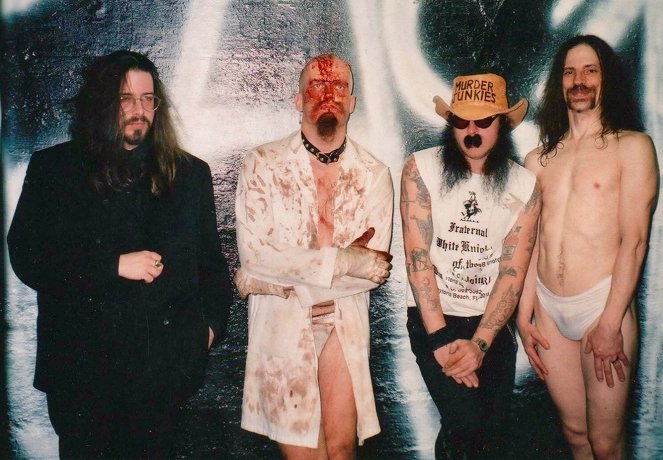
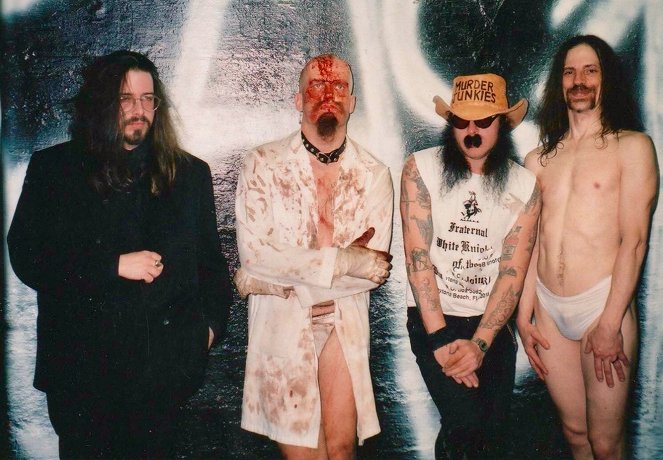
GG Allin was one of the most controversial figures in punk history, known for extreme performances that pushed music into disturbing new territory. From his early life as Jesus Christ Allin to his rise through bands like The Jabbers and The Murder Junkies, his career was defined by chaos, violence, and self-destruction. His live shows often shocked audiences and sparked outrage across the music world. Fueled by addiction, legal issues, and a mission to bring “danger” back to rock, Allin’s life ended in 1993 from a heroin overdose, leaving behind a legacy that continues to divide and disturb listeners today.
GRIM REALITYDISTURBING CASESMUSICSINS OF THE FLESHNSFWOUR DREADFUL WORLDGROSSNO HOPEABYSS
5/6/20267 min read
GG Allin: The Man Who Refused to Stay Human
They didn’t invent me.
They just gave me a name for it later—
“the most spectacular degenerate in rock n’ roll history.”
But before all that, I was Jesus Christ Allin.
That wasn’t a stage name. That was my beginning. My father believed he was a prophet, dug graves in the basement, talked about the end of the world like it was already happening. I grew up in that noise—in fear, in confusion, in something that didn’t feel real.
My mother tried to fix it. Changed my name to Kevin Michael Allin in 1962, hoping I could live a normal life.
There was no normal left in me.
Music came later. Punk, country, spoken word—I didn’t care about the genre. Bands like The Jabbers, The Murder Junkies… albums like Always Was, Is and Always Shall Be, Freaks, Faggots, Drunks and Junkies, even Carnival of Excess. Songs like “Bite It You Scum.”
People thought that was the point.
It wasn’t.
I saw what rock had become—clean, controlled, corporate. Safe. I didn’t want safe. I wanted danger back. I wanted people to feel something real, even if it made them sick.
So I became it.
Not an act. Not a character.
A problem.
The shows started normal enough—if you can call fights, blood, and chaos normal. But that wasn’t enough. I kept pushing, testing how far people would go before they walked away.
Most didn’t.
So I erased the line completely.
Fights. Blood. Chaos.
Then something shifted.
It wasn’t just violence anymore. It was degradation—intentional, calculated. I started showing people a version of humanity they didn’t want to admit existed. Not loud, not fast… just wrong in a way that made the room turn cold.
You could feel it instantly.
The air in the club is a thick, sour soup of sweat, cheap beer, and the metallic tang of blood. The lights are blinding, hot enough to cook skin, and the feedback from the Murder Junkies' amps is a physical weight pressing against my chest. This isn't a show; it’s a war, and I’m the only one here who knows the rules.
The audience is a blur of terrified, fascinated faces—kids who think they’re "punk" because they bought a leather jacket. They want a spectacle? I’ll give them the truth of the human animal.
My stomach churns, a violent, cramping protest from the drugs and the rot I’ve been feeding it. I don’t fight it. I welcome it. I drop my pants in one fluid, jagged motion, my boots slipping on the slick floor. I squat right there at the edge of the stage, the wood grain biting into my heels. It was warm and wet while it was oozing out of me and sliding out of my asshole, getting shit in between my ass cheeks, and plopping on the stage. Once I was done, I couldn't help it, I reached down with my bare hands and smelt it... It smelt so good I just couldn't help it, but I tasted it... I thought I wouldn't be sheilfish and I shared with my fans, throwing into the crowd like I'm making it rain.
There’s a sudden, sharp silence from the front row that cuts through the guitar screech. I push more shit out of me. It’s an agonizing, hot release—a heavy, steaming coil of waste that hits the stage with a wet, sickening thud. The stench hits me first: a wall of sulfur and decay that makes my own eyes water.
I reach down, the warmth of it shocking against my cold, calloused fingers. It’s soft, like wet clay. I scoop it up, feeling the grit and the slime coat my palm, and for a second, I just hold it—a piece of my own dying body. Then, with a guttural roar, I hurl the mess directly into the gaping mouths and wide eyes of the front row. I watch the brown streaks splatter across a kid's white t-shirt, the wet spray hitting his cheek.
I am no longer just a performer; I have become the physical manifestation of the chaos in the room. The remaining filth is smeared across my skin, mixing with the sweat and the grime of the stage. The crowd recoils, a wave of shock and revulsion rippling through the venue as the music continues to blare, relentless and deafening. This is the raw, unfiltered reality of the performance, stripping away any pretense of art or civility until only the animal remains. The show reaches its peak in a blur of noise and confrontation, leaving the audience to grapple with the aftermath of what they have just witnessed.
Some people laughed, thinking it was just another stunt. Others went quiet, realizing too late that this wasn’t part of the show—they were the show now. A few backed away completely, like they finally understood they weren’t watching music anymore… they were watching someone tear down every last boundary a person is supposed to have.
That’s when the line disappeared for good.
Not just violence—something deeper. Something that made people question why they were even standing there. You could feel the room shift. Some laughed, thinking it was a joke. Others froze. A few left, realizing too late that they weren’t watching a performance anymore—they were part of it.
That moment changed everything.
After that, there was no separation between me and what I did. I used whatever it took—rage, humiliation, even my own body—to tear down every boundary people thought couldn’t be crossed. I even prepared for it, using laxatives before shows just to make sure nothing held me back.
That’s what people remember.
But that wasn’t all.
I lived it offstage, too. Over 50 arrests—assault, exposure, whatever came with the life I built. Prison didn’t stop me. It just made it clearer that there was no going back. I told people I was a “rock and roll messiah,” an outlaw fighting against something bigger than music itself.
Maybe I believed it.
Or maybe I just needed a reason to keep going.
Drugs filled the rest. By the late ’80s, heroin, alcohol, pills—anything I could get. I wasn’t afraid of it. I leaned into it. The more it took from me, the less I had to feel.
By June 28, 1993, after a final chaotic show in New York, it caught up.
No stage. No crowd.
Just an overdose.
They say people were still around me after, taking pictures, thinking I was just passed out. That sounds about right. Even in death, it didn’t look real.
They buried me how I wanted—unwashed, leather jacket, jockstrap, a bottle of Jim Beam. Like the show never ended.
And maybe it didn’t.
Because what I was… it wasn’t just music.
It was proof.
Proof that if you push far enough—past pain, past shame, past everything—you don’t become something bigger.
You just stop being human.
Got it—dropping the POV and writing a clean, factual, dark-toned article with everything woven together smoothly.
GG Allin: Chaos, Shock, and the Collapse of a Human Boundary
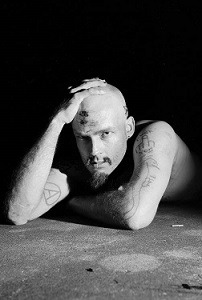
GG Allin (1956–1993) remains one of the most controversial figures in music history, known for pushing performance beyond rebellion into something far more disturbing. Often labeled “the most spectacular degenerate in rock n’ roll history,” his live shows became infamous for extreme behavior, violence, and a deliberate effort to erase the line between performer and spectacle.
Born Jesus Christ Allin, he grew up in a deeply unstable household. His father, a religious extremist, reportedly believed he was a prophet and threatened violence against the family while digging graves in their basement. This environment shaped Allin’s worldview early. In 1962, his mother legally changed his name to Kevin Michael Allin in an attempt to give him a more normal life—but the damage had already taken root.
Allin entered the music scene through punk, later branching into country and spoken word. He recorded extensively with bands such as The Jabbers and The Murder Junkies, releasing albums like Always Was, Is and Always Shall Be (1980), Freaks, Faggots, Drunks and Junkies (1988), and Carnival of Excess (1991). Songs like “Bite It You Scum” and “Don’t Talk to Me” reflected his aggressive, confrontational style.
However, it was his live performances that defined his legacy. What began as chaotic punk shows escalated into something far more extreme. Violence, self-harm, and unpredictable behavior became expected. At a certain point, his performances crossed into acts meant to provoke pure discomfort, including public defecation—something he even prepared for by using laxatives beforehand. These moments often divided audiences; some viewed them as raw authenticity, while others saw them as the complete breakdown of artistic boundaries.
Offstage, his life mirrored the chaos. Allin was arrested over 50 times and spent years in prison, including a significant sentence for felonious assault. He frequently appeared on talk shows like The Jerry Springer Show and Geraldo, presenting himself as a “rock and roll messiah” and an outlaw resisting the commercialization of music.
Substance abuse played a central role in his life. By the late 1980s, he was heavily addicted to heroin, alcohol, and other drugs, consuming whatever he could obtain without concern for the consequences. This lifestyle ultimately led to his death on June 28, 1993, following a performance in New York City, where he died of an accidental heroin overdose at age 36.
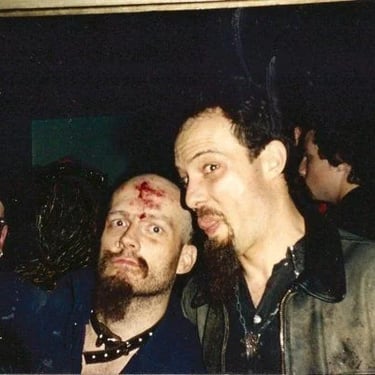
Even after death, controversy followed. He was buried in Littleton, New Hampshire, according to his wishes—unwashed, dressed in his signature clothing, with personal items placed in the coffin. Reports also circulated that attendees at a gathering shortly after his death took photos with his body, initially unaware he had passed.
His life was later documented in Hated: GG Allin and the Murder Junkies (1993), directed by Todd Phillips, further cementing his legacy as both a cultural outlier and a deeply troubling figure.
GG Allin’s story is not just about music—it is about how far a person can push identity, performance, and self-destruction before nothing recognizable remains.
Disclaimer:
Some details in this article have been exaggerated or stylized for dramatic and horror-focused effect, including sarcasm and humor for storytelling. This piece is intended strictly for entertainment within the dark, horror-true-crime genre. It is NOT meant to mock, disrespect, or diminish the real tragedy of anyone's situation or circumstances. Our deepest condolences remain with the victim's family, friends, and loved ones.
Despair
A dark exploration of societal decay and despair.
Void
+1234567890
© 2025. All rights reserved.
Any comments, business inquiries, ideas, or stories, let us know