
The Dorm Room of Death: The Ma Jiajue Murders
In February 2004, Yunnan University became the setting of one of the most disturbing campus murder cases in modern Chinese history. Over several days, biotechnology student Ma Jiajue murdered four fellow students inside a dormitory before fleeing the scene. As investigators uncovered the details, a story of resentment, humiliation, isolation, and perceived betrayal emerged. This article examines Ma's background, the events that led to the killings, the nationwide manhunt that followed, and the competing theories surrounding his motive. More than two decades later, the Yunnan University dormitory murders remain a chilling and unforgettable tragedy.
DISTURBING CASESGRIM REALITYSINS OF THE FLESHNSFWOUR DREADFUL WORLD
6/1/20267 min read
Part I: The Dirt
I was born into the mud of Guangxi. Poverty isn’t just an empty pocket; it is a physical weight. It is the dust in your throat, the grease on your single pair of trousers, the ache in your father’s back as he bends over the fields to scrape together coins for my school fees.
I am smart. The "prodigy" of the village. But brilliance in a village means nothing when you step into the neon glare of the city.
At Yunnan University, I am a ghost. The biochemistry formulas make sense; people do not. I walk through the campus and see the way they look at my worn-out shoes. I hear the microscopic pauses in their conversations when I walk by. They have computers, clean jackets, futures. I have an inferiority complex that grows like a tumor in my chest. I bottle it. I lock it down. I become the eccentric, the quiet kid, the boy with the short fuse who nobody wants to push.
Until the card game.
Part II: The Snap
It is winter break, February 2004. The dorms are mostly empty, echoey, and cold. We are playing cards—me, Tang, Yang, Gong, and Liang. My "friends." The only people I thought actually saw me.
"You're cheating, Ma," one of them laughs. It isn't a playful laugh. It is sharp.
"I'm not," I say. My voice is tight.
Then the floodgates open. The insults don't stop at the cards. They target my life. They target my poverty. No wonder you’re like this. Look at where you came from. You have a rotten character, Ma. No one actually likes you.
Every sacrifice my family made, every hour spent staring at a wall in isolation, every hidden humiliation flashes in front of my eyes. It isn't just an argument. It is an execution of my dignity. They didn't just call me a cheat; they told me I didn't deserve to exist in their world.
The rage isn't a slow burn. It is an explosion. It blindingly takes over.
I bought a metal hammer at the market. I hide it.
On February 13, Tang is alone in the room. He doesn't see it coming. The first swing shatters the silence. The second ensures he never speaks again. Blood on the concrete floor. Clean it up. Drag him to the cabinet. Lock it.
The next day, Yang walks in. Then Liang. Then Gong. One by one, over three agonizing days, the hammer rises and falls. The room becomes a slaughterhouse hidden behind a closed door. I don't feel horror. I feel a terrifying, icy focus. They wanted to erase my dignity? I erased their lives.
Only one boy, Wang, is spared. Why? Because he once bought me a meal when I was starving. He treated me like a human being. He lives. The others rot.
Part III: The Hunt and the End
By February 23, I am long gone, flying down the roads on fake IDs. Behind me, Room 317 is opening. I can almost smell it from hundreds of miles away—the stench of decay that alerts the guards. The country explodes. My face is on every television screen, every telephone pole. A 250,000 yuan bounty on the head of the biochemistry prodigy.
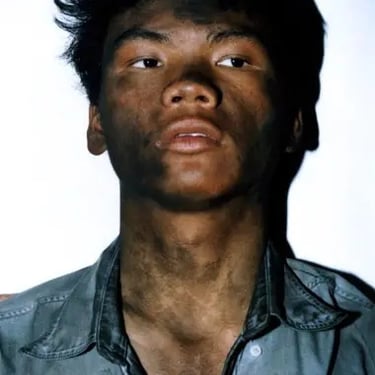
I end up in Sanya, Hainan. The ultimate comedown. From a university student to a gutter rat. I stop washing. I tear my clothes. I eat garbage out of plastic bags. I live among the beggars in the market, pretending to be mute, praying the dirt on my face hides the features of the most wanted man in China.
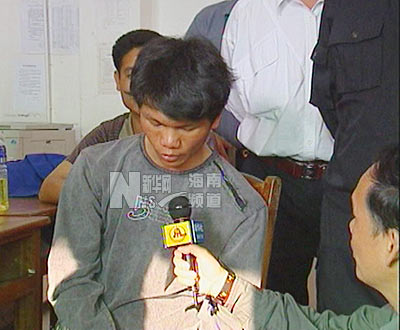
March 15. A citizen looks too closely at the beggar eating trash. The police arrive. The handcuffs snap shut on my wrists. It’s over.
In the courtroom in April, the cameras glare at me. I don't ask for mercy. I look at my father, who spent his life trying to give me a future, and I feel the only real sting of tears. I destroyed four families, and I destroyed my own.
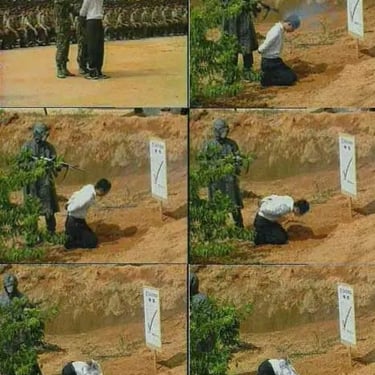
June 17, 2004. The execution room is sterile. A sharp contrast to the bloody concrete of Dorm 317. The gun cocks,, with the barrel on my temple. Then all of a sudden the lights fade. The boy from the Guangxi mud, who wanted so badly to be respected, disappears into the dark.
Four Students, One Hammer, and a Hidden Rage
In February 2004, a horrifying discovery inside a university dormitory shocked China and drew international attention. Four students at Yunnan University in Kunming were found murdered, their bodies hidden inside the dorm room they had once shared with their killer.
The perpetrator was 23-year-old Ma Jiajue, a fellow student studying biotechnology. To classmates, Ma often appeared quiet, intelligent, and reserved. Few suspected that beneath the surface, resentment and humiliation had been festering for years.
According to Ma's later confession, the violence began after a seemingly ordinary card game. During the game, fellow student Shao Ruijie allegedly accused Ma of cheating and publicly called him a "bad person." The accusation deeply wounded Ma, who considered Shao one of his closest friends. He later claimed the incident left him feeling betrayed and mocked.
What followed was a calculated and deadly escalation.
Between February 13 and 15, 2004, Ma used a hammer to attack his victims inside their dormitory. Investigators determined that Shao Ruijie was the first target. Ma later decided to kill two other roommates, Gong Bo and Tang Xueli, believing they either shared negative opinions about him or could interfere with his plans. A fourth student also became a victim during the attacks.
After the killings, Ma attempted to conceal the crime. The bodies were hidden within the dormitory, delaying discovery while he fled the university. For weeks, authorities searched for the suspect as his photograph circulated across China. The case became one of the country's most heavily publicized manhunts.
In March 2004, Ma was finally recognized and arrested after a citizen identified him. During questioning, he admitted responsibility for the murders. He was convicted of four counts of murder in April 2004 and sentenced to death. The sentence was carried out in June 2004.
The case remains controversial because of the ongoing debate surrounding Ma's motive. While his confession focused on humiliation, conflict, and perceived bullying, later commentary from criminal psychologist Li Meijin suggested that classmates may have exposed a deeply personal secret involving Ma's visits to sex workers. Whether this revelation played a significant role remains disputed.
More than two decades later, the Yunnan University murders remain one of China's most infamous campus crimes—a chilling example of how hidden anger, isolation, and perceived humiliation can spiral into irreversible violence.
Police Interrogation Transcripts
Ma Jiajue’s confessions after his arrest on March 15, 2004, provided a chilling, clinical look into his psyche [1]. Investigators noted that he was remarkably calm when recounting the logistics of the murders but became highly emotional when discussing his family and the specific insults that triggered him [1].
The Triggering Words: During interrogation, Ma explicitly stated that it wasn't just being accused of cheating that broke him, but a comment from his closest friend, Shao (who was not among the victims, though others echoed the sentiment). The friend reportedly told him, "Even Shao thinks your character is terrible. It's no wonder you have no friends." Ma told police that hearing this made him feel that his entire existence and efforts to fit in were a total failure.
The Logistics of Death: He admitted to buying the hammer days in advance and practicing how to strike effectively. He targeted his victims when they were isolated or sleeping in the dorm room to ensure they could not fight back or call for help.
The Logic of Separation: When asked why he killed specific classmates but spared others, he explained his strict internal tally of who had disrespected him versus who had shown him basic human decency (like buying him food).
The Shift in Chinese University Mental Health Screening
The Ma Jiajue incident was a watershed moment for higher education administration in China, shifting the focus from purely academic achievement to psychological well-being. Before 2004, mental health counseling on campuses was largely nonexistent or viewed with heavy stigma.
Mandatory Psychological Archives: In the wake of the killings, the Ministry of Education mandated that universities establish psychological health archives for all incoming freshmen. Students are required to take psychological evaluation tests upon enrollment to identify high-risk traits like extreme introversion, paranoia, or severe depression.
The "Four-Level" Prevention Network: A standardized early-warning system was established across campuses. This system relies on a network stretching from dorm roommates (trained to spot erratic behavior), to class monitors, to college counselors, up to professional university psychologists.
Targeting Impoverished Students: The case highlighted the immense psychological pressure faced by "poor students from rural areas" (pinfu xuesheng). Universities revamped their financial aid systems to not only provide tuition assistance but also offer targeted social integration support and counseling to bridge the cultural gap between rural migrants and wealthy urban students.
The dormitory still exists in memory, frozen in a moment that should never have happened. Four students went to sleep believing they would wake up to another ordinary day of classes, exams, and plans for the future. Instead, their lives ended in a place that was supposed to be safe. Long after the headlines faded, the case continued to linger like a shadow over the university. The victims became names in a criminal file, while the questions surrounding the motive never completely disappeared. What remains is a chilling reminder that resentment can grow unnoticed, hidden behind a quiet face and an ordinary routine, until the consequences become irreversible. Some crimes end when the killer is caught. Others leave behind an emptiness that never truly leaves the people forced to live with it.
Disclaimer:
Some details in this article may or may not have been exaggerated or stylized for dramatic and horror-focused purposes, which may include sarcasm and humor for storytelling purposes. This piece is intended strictly for entertainment within the dark, horror-true-crime genre and is NOT meant to mock, disrespect, or diminish the real tragedy of anyone's situation or circumstances. Our deepest condolences remain with the victim's family, friends, and loved ones. Sources would be listed below if applicable.


Despair
A dark exploration of societal decay and despair.
Void
+1234567890
© 2025. All rights reserved.
Any comments, business inquiries, ideas, or stories, let us know